
From the towpath to the local climb
Cycling around Narbonne
A car-free path starts right outside our door and runs all the way to the sea — and a quarter of an hour later you are facing a limestone massif that the Route d'Occitanie has raced through. In between: vineyards, lagoons and roads that carry more road bikes than cars on Sundays. These are the routes Nico rides himself — with elevation profiles, so you know what you are getting into.
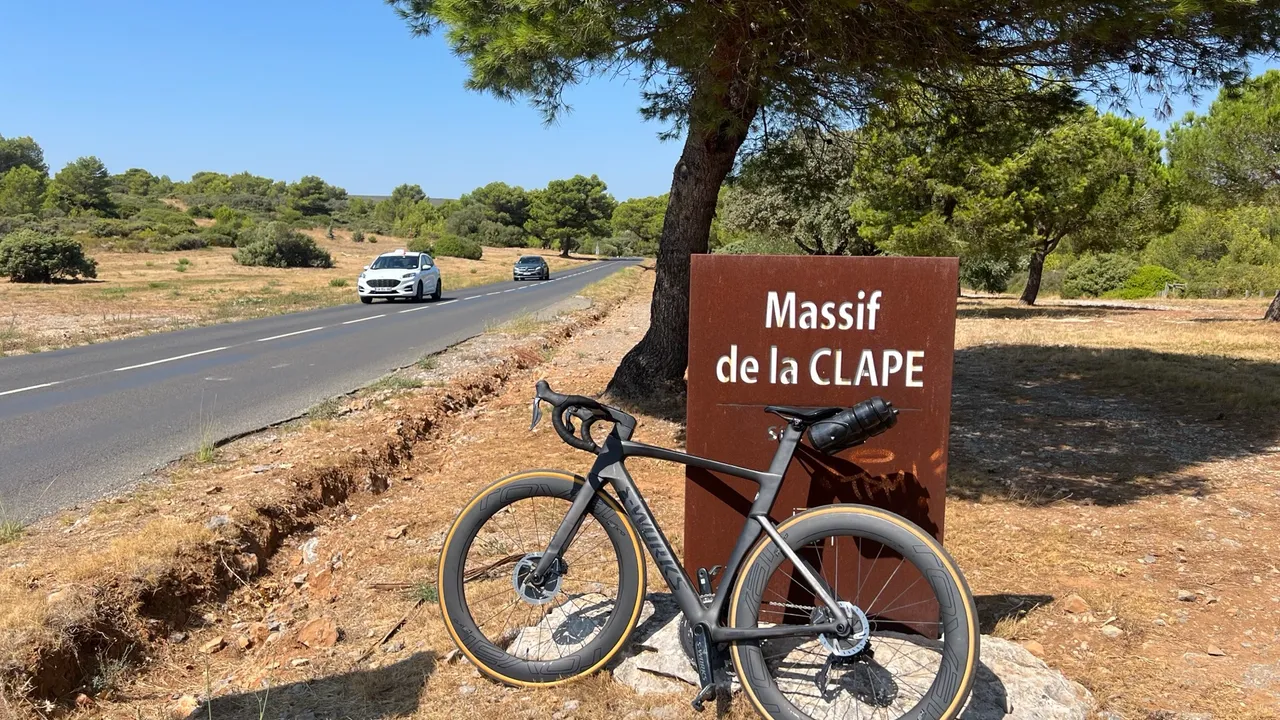
Flat and car-free: the Canal de la Robine
Best thing first, and it is right outside the door: along the Canal de la Robine runs an old towpath, today a cycle path — flat, dead straight, without a single car. It is part of EuroVelo 8, the Mediterranean route, and you can ride it either way: north into the old town of Narbonne in half an hour, south through the lagoons all the way to the sea.
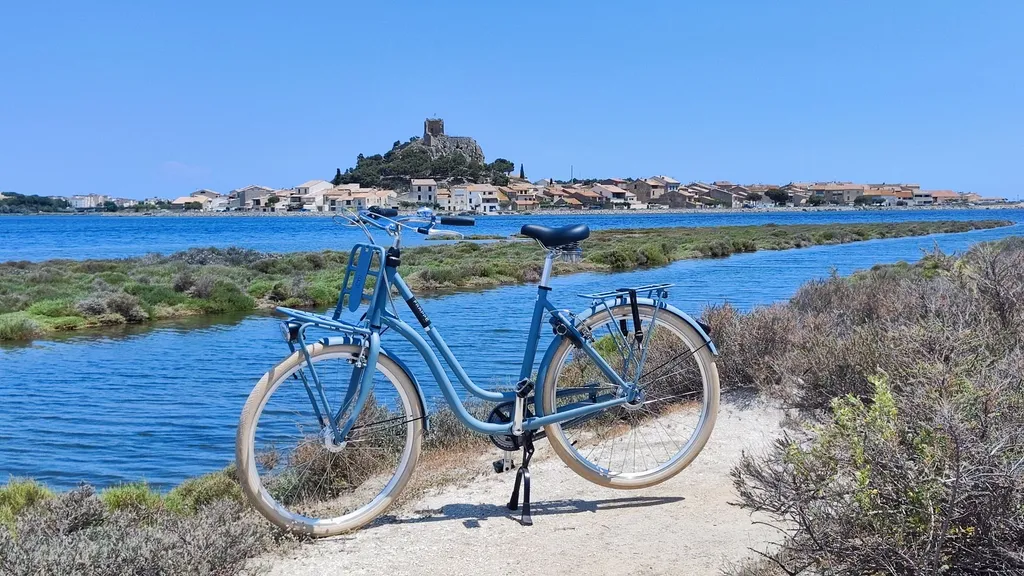
The finest destination lies on the way to the sea: from the Écluse de Mandirac — barely a kilometre from our door — the path continues to the Île Sainte-Lucie, a nature reserve of limestone, old salt pans and wild beach; it is a good 11 kilometres to the island entrance at the lock keeper's house, and around 14 to the sea at Port-la-Nouvelle. Pine woods, viewpoints over the étangs, and with luck flamingos coming in to land. For families, e-bikes and anyone who just wants to ride, this is the loveliest tour around — and you get there without crossing a single road. Just one thing up front: from Mandirac onwards the path is unsurfaced in places — no good on a road bike, but on a touring, city or e-bike it rolls along fine.
Into the massif: La Clape
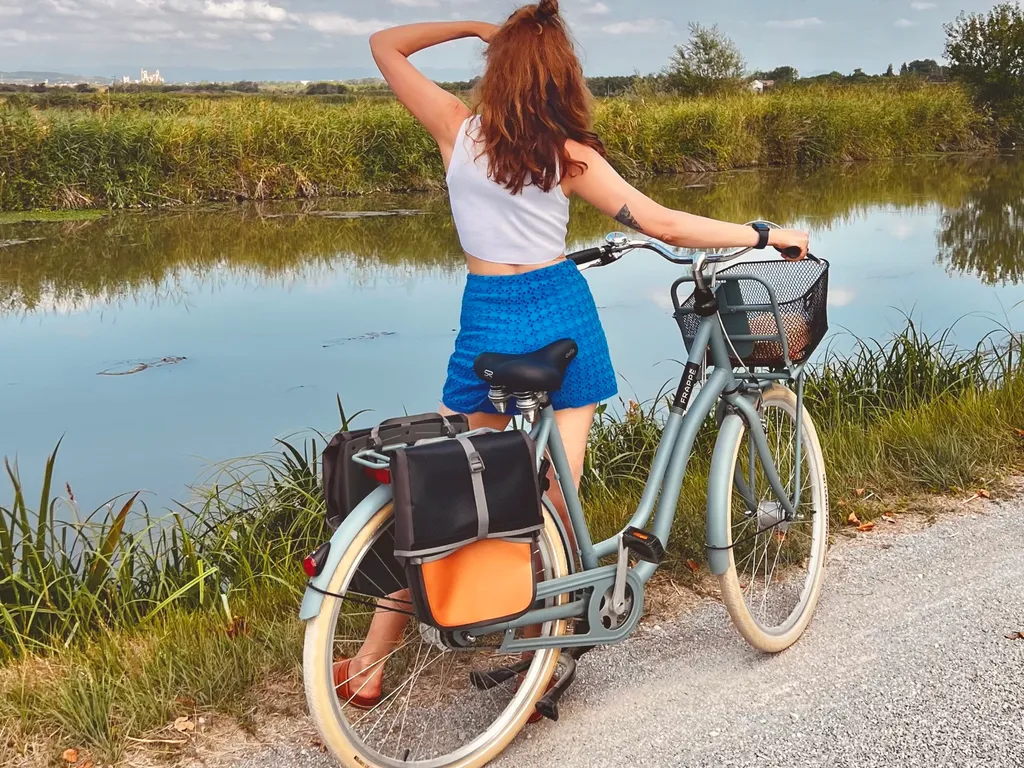
If you are after elevation, head for the Massif de la Clape — the limestone massif between Narbonne and the sea, once an island, today a sea of garrigue, pines and vineyards. The classic is the crossing: one road that cuts straight through the massif, past the turn-off to the Table d'Orientation at the top with its view over plain, lagoons and sea, and down the other side. Eleven kilometres, high point 154 metres.
The two profiles below show the same road — once from each end. From the west you start in Armissan (or at Château et Domaine de Moujan) and roll down to the sea at the finish: the pleasant direction. From the east you start at Narbonne-Plage at sea level — 179 metres of climbing from zero, and that is the honest direction. Ride it as a loop and you get both in one day.
One tip that can save your day: in high summer the préfecture closes the tracks in the massif because of wildfire risk — in 2026 without a break from 3 July to 31 August, and the same rule covers the Île Sainte-Lucie. Whether and where closures apply is updated daily on risque-prevention-incendie.fr/aude, and the Gruissan tourist office answers the phone. The road across the massif is not affected: if the tracks are shut, you simply ride over the top.
Armissan → Narbonne-Plage
From the west · same road, pleasant direction
Elevation data SRTM via BRouter, routed for road bikes (paved roads only).
Narbonne-Plage → Armissan
From the east · same road, honest direction
Elevation data SRTM via BRouter, routed for road bikes (paved roads only).
The local climb: Côte de la Couleuvre
A good kilometre and a half at 8.5 per cent on average — from the plain up onto the plateau. It is no alpine pass, but it is the climb we have here, and it does the job nicely: it gets down to business from the first bend and barely lets up. Important on a road bike: the tarmac ends at 144 metres. Beyond that, only gravel leads on to the Table d'Orientation — that is gravel or mountain-bike ground; on narrow tyres you turn round here. The view from the end of the tarmac already goes a long way.
We like to ride it three times in a row. Nobody has to copy that — once up is plenty for the photo and the good feeling.
Côte de la Couleuvre
The local climb · Strava category 4
Elevation data SRTM via BRouter, routed for road bikes (paved roads only).
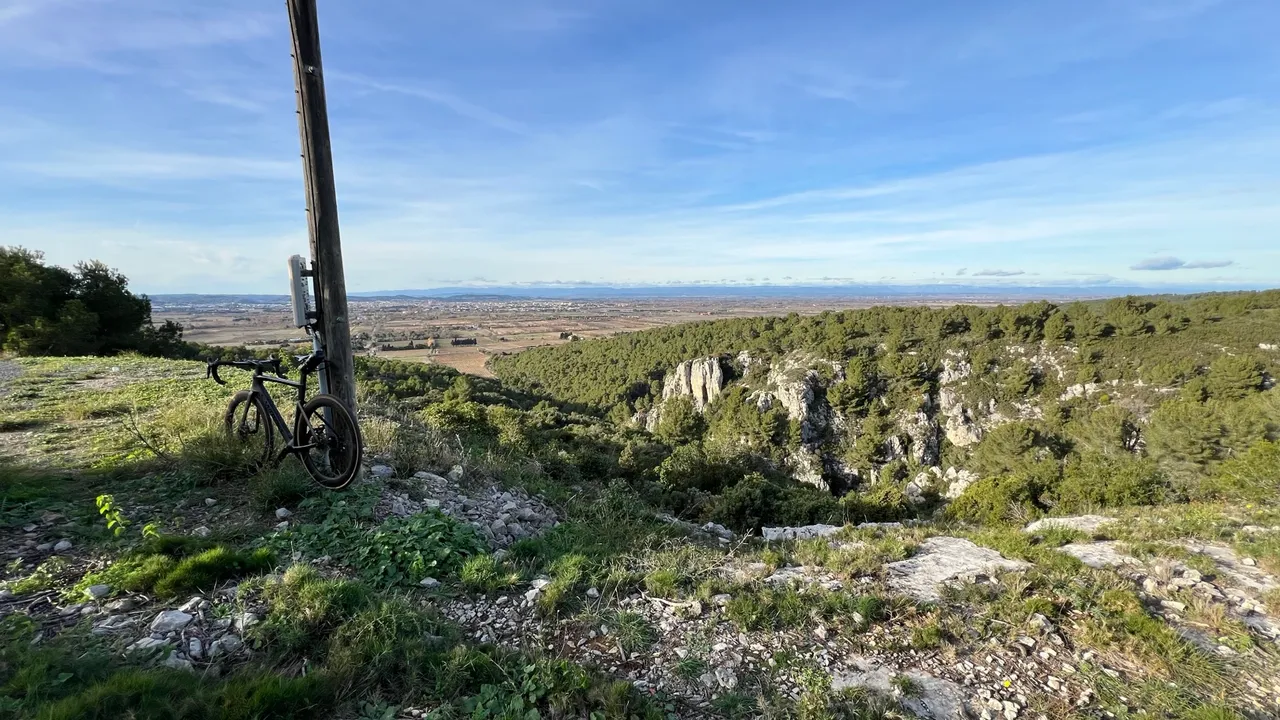
Through the vineyards: Capitoul → Rouquette
A short, beautiful link straight through the massif: from Château Capitoul over the high ground past the Chapelle Notre-Dame des Auzils to Château Rouquette-sur-Mer above Narbonne-Plage — a good nine kilometres that can be extended at will. If your legs are willing, add the big northern loop back via Vinassan, Salles-d'Aude and Fleury; that turns into a day out of more than 60 kilometres. And wherever you stop along the way, you will be standing at a wine estate — which we heartily recommend, but please only on the way home.
Further out: into the Corbières
The Corbières south-west of Narbonne are cyclists' country: empty roads, vineyards, endless bends. Honestly, only the approach is tedious — the cycle path drags on until you reach the entry point near Bages. Our tip: bikes on the car, drive to Bages and start there. Barely out of the village, the road runs right along the water of the étang — the lagoon on your left, the fishing village on its rock at your back, and after a good five kilometres Peyriac-de-Mer. Where to go from there is in our day-trips article — the Corbières loop with Lagrasse is worth the journey by bike too.
Gravel & mountain biking
We ride road bikes ourselves — but for off-road there is something better than our opinion here: an official Espace VTT-FFC in the Massif de la Clape with 110 waymarked kilometres on six numbered loops, from green to black. The starting point is the Parking du Moulin by the Palais des Congrès in Gruissan; maps and advice come from the tourist office there. If you would rather be guided, book a tour with Languedoc VTT Évasion.
Renting bikes
Arrived without bikes? Languedoc VTT Évasion at the Pont de la Liberté in central Narbonne rents city bikes, children's bikes, e-bikes and gravel bikes — and delivers within 40 kilometres, so right to us. Road bikes are the one thing they don't carry: if you need one, bring it along. A simple city bike is enough for the canal; for La Clape, something with gears pays off.
And at our place?
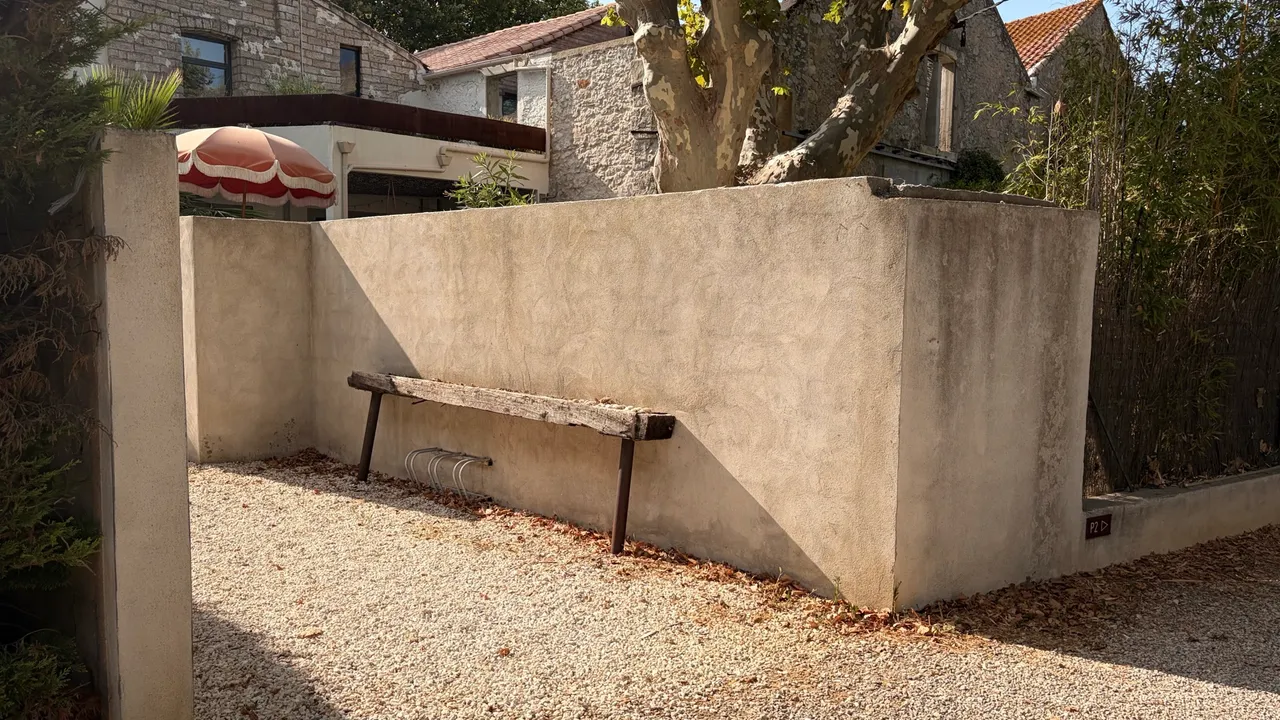
At the Penthouse there is a bike rack in a sheltered corner behind the wall — gravel, shade from the plane tree, a bench beside it for changing shoes. At the Masterpiece there is plenty of room in the front garden and the driveway. For ordinary bikes that is just the right spot. If you arrive with high-end bikes and want them locked away, it is best to let us know before you travel: then we can check whether our detached garage is free. And for rinsing the bikes off, there is a garden hose.
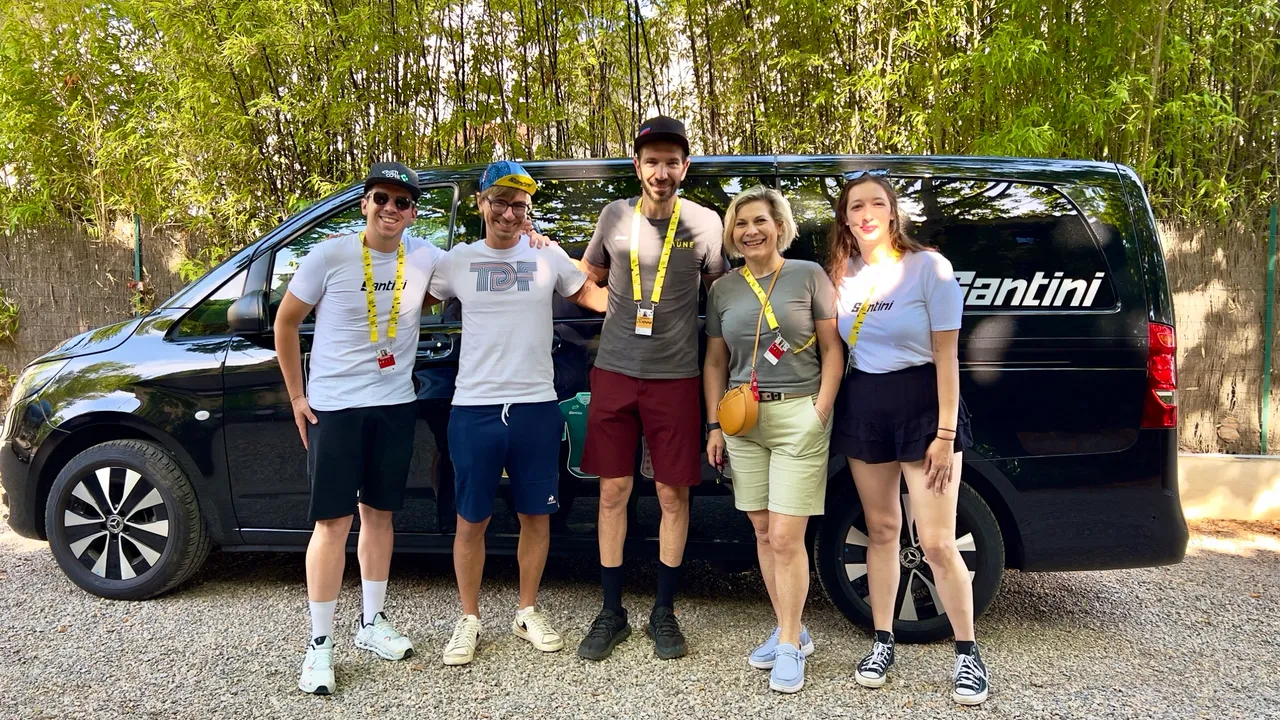
Coming as a group? In July 2024 a Tour de France stage started in Gruissan, a quarter of an hour from here — and Santini, the Italian maker of the yellow jersey and the other classification jerseys, was based with us: their base for the rest day the riders spent in Gruissan, for the stage start, and for the customer event they ran from here. And it did not stay a one-off: two years later, in August 2026, the Vuelta a España started a stage in Gruissan too. Since then we know the house works for cycling groups — three apartments, up to 15 places at one table, two pools to recover in and room for the bikes. Just write to us and we will plan it through with you.
Frequently asked questions
- When is the best time to cycle here?
- Spring and autumn. From March to June and September to November it is pleasantly warm, the air is clear and the roads are empty. In high summer you ride early — and the tracks in the massif may be closed due to wildfire risk, though the road across it (the D168 towards Narbonne-Plage) stays open.
- Can we come without our own bikes?
- Yes. Languedoc VTT Évasion in Narbonne rents city bikes, children's bikes, e-bikes and gravel bikes, and will deliver them right to our door on request. For a few relaxed days along the canal, the simplest model is plenty.
- Where do the bikes go overnight?
- The Penthouse has a bike rack in a sheltered corner behind the wall; at the Masterpiece there is plenty of room in the front garden and the driveway. If you would like high-end bikes locked away, it is best to ask before you travel — then we can check whether our detached garage is free.
- And what about the wind?
- The tramontane is part of life here: a dry north-westerly that leaves the air crystal clear — strongest in winter and spring, and more the exception in high summer. On strong days the massif gets rough, while the canal is far more sheltered. Our rule of thumb: head out into the wind in the morning, ride home with it at your back — and on genuine storm days, well, it becomes a wine-estate day.
- Is the area suitable for families?
- Very. The towpath along the Canal de la Robine is car-free, dead straight and virtually flat — from our door all the way to the sea. The hills only start when you go looking for them.