
January to March in the south
Wintering in Narbonne
The longest stay in the history of our house was not a summer booking: 85 nights, from mid-January into April. And one of our favourite reviews came from a March — "stayed all winter, everything perfect", wrote Lorraine. At some point we realised this is no coincidence: the months when the sky back home hangs grey are the clearest of the year down here.
The honest winter
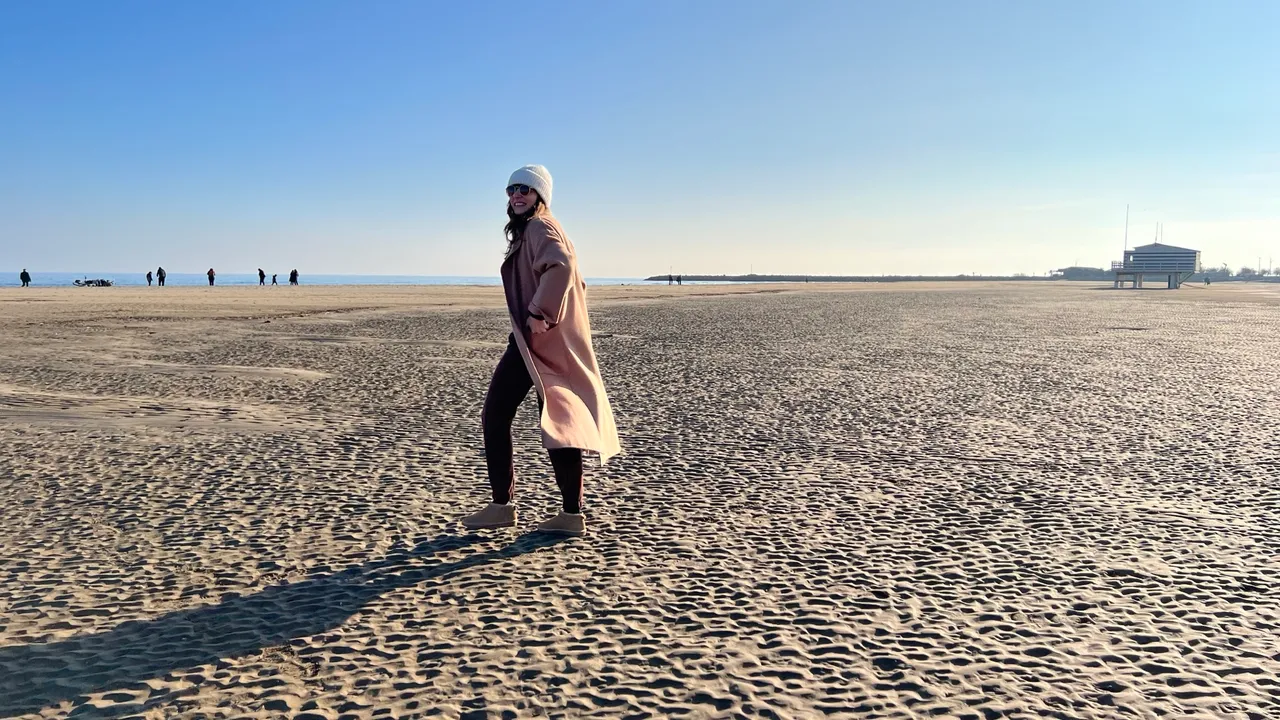
Let's start with the truth, so the rest stays credible: winter here is not a second summer. In January it is 11–12°C by day, nights drop into single figures, and when the tramontane blows, you zip your jacket right up to the chin. But then there is the light. Narbonne is one of the sunniest corners of France, winter rain is the exception — and the tramontane whistling round your ears is also the reason the sky is such an outrageous blue afterwards. It is a different winter, not a cancelled one: you go outside, every day, and after two weeks you notice what that much brightness does to body and mind.
Our shorthand for the off-season: the town keeps living, the coast sleeps. In Narbonne the markets, theatre, cinema and cafés simply carry on — by the sea, things wind down, the beach restaurants take their break, and that is precisely the appeal. Walk the beach in January and you share it with a few shell collectors and nobody else.
For our British guests — the paperwork in three minutes: Since Brexit the 90/180 rule applies: at most 90 days in any rolling 180-day period, counted across the whole Schengen area, arrival and departure days included. A winter of 8 to 12 weeks fits comfortably inside that and leaves headroom for other European trips before and after. The oft-quoted "70-or-75-day limit", by the way, is not law — it almost always comes from the trip limit of your travel insurance; many UK policies only cover 31 to 90 days per trip, and dedicated long-stay policies exist. Since April 2026 the EU entry system EES has been counting your days automatically instead of by passport stamp — so plan with a little margin rather than down to the exact day. The ETIAS travel authorisation was not yet in force when this article was published; once it arrives it will be an online formality, and we will update this page. For all EU guests, meanwhile: get in the car, drive down, stay. (All without guarantee — the official sources are what count, such as the EU Schengen calculator.)
What winter here can do: the calendar
December opens with lights: for the Fééries de Noël, chalets, an ice rink and arches of light turn the canal banks and squares of Narbonne into one big stage until early January — and the stalls serve vin chaud and freshly shucked oysters, which belong to a Christmas market here as naturally as bratwurst does elsewhere.
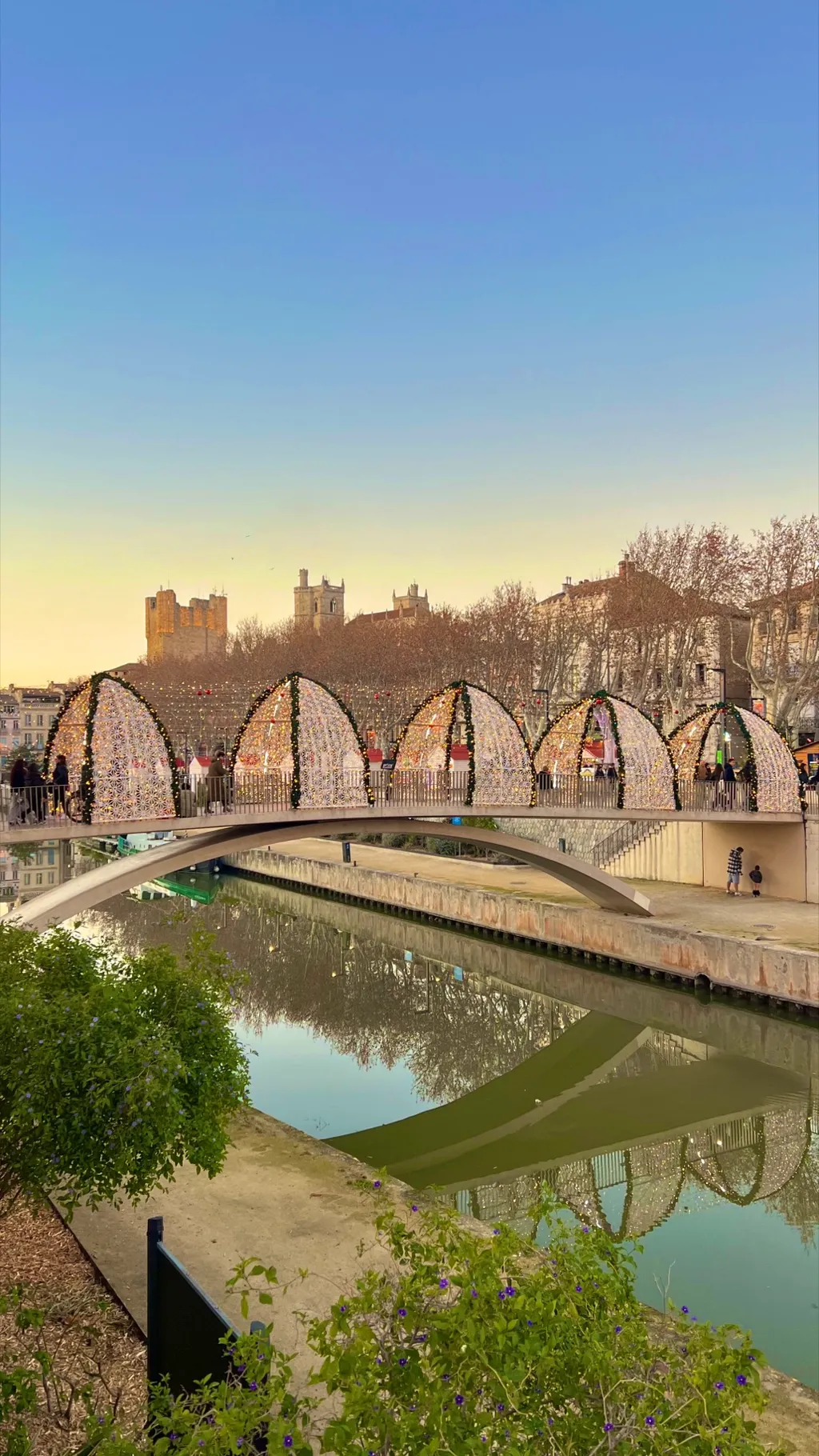
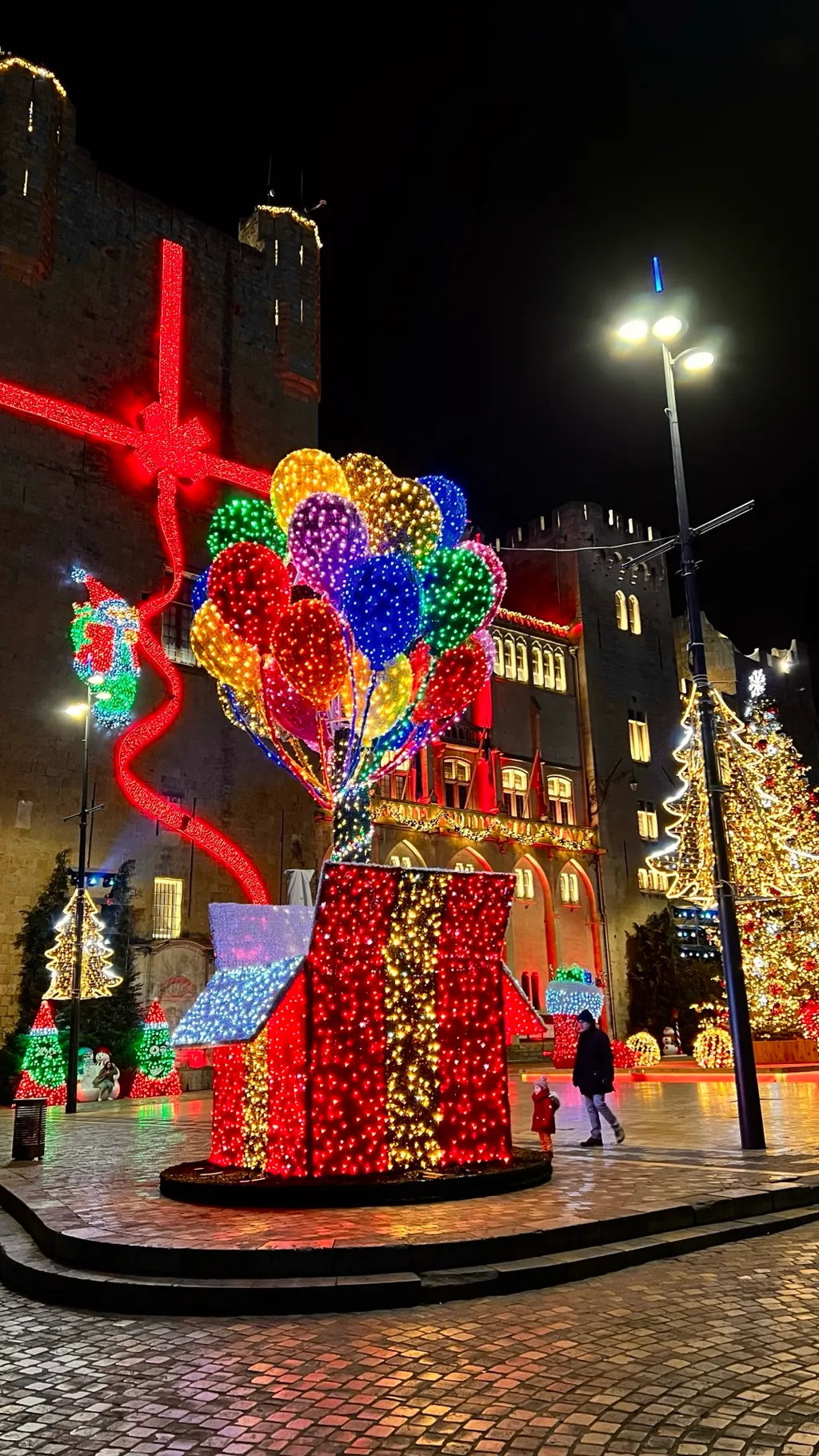
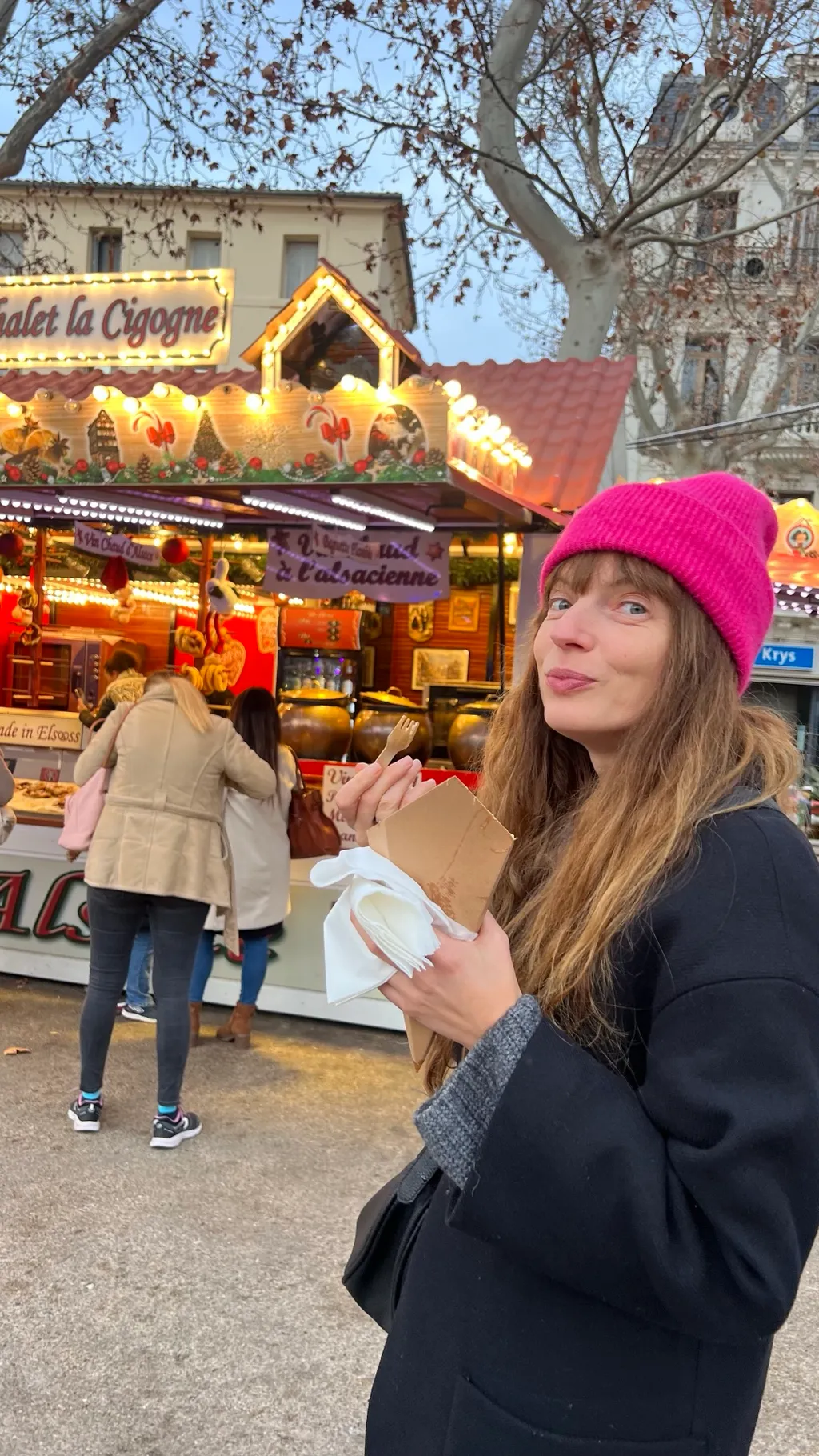
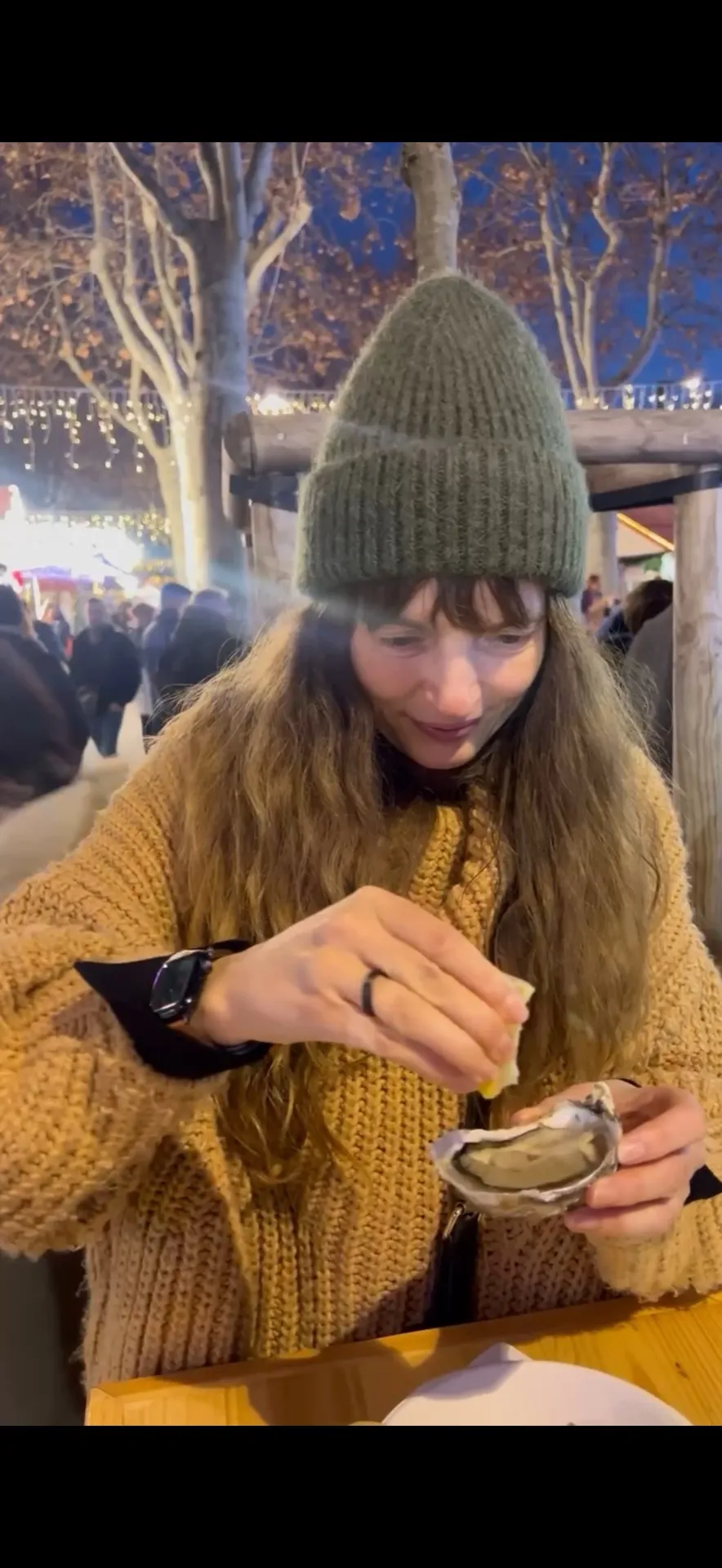
Fééries de Noël: arches of light over the canal, the giant bow on the town hall — and vin chaud with oysters at the stalls instead of mulled wine and bratwurst.
On 1 January, a few hundred people in fancy dress leap into the 13°C sea at the New Year's swim off the Plage des Chalets (we describe it in our active article — it is exactly as silly and as lovely as it sounds). From December to February it is also truffle season: in the villages of the Corbières and the Minervois — Talairan, Villeneuve-Minervois, Moussoulens — certified black truffles are sold on Saturdays, with truffle-hunting demonstrations and plenty of village fair around them; the biggest date is the Ampélofolies du Cabardès at the end of January. From mid-January the Carnaval de Limoux joins in, calling itself the longest carnival in the world: every weekend until the end of March the fécos parade across the arcaded squares — a perfect winter Sunday outing, a good hour from here.
And then there is the natural spectacle right on the doorstep: the flamingos stay on the étangs all year round, but from December to mid-February it is courtship season — that is when they are at their pinkest, and the shallow shores at Peyriac-de-Mer and Bages become the stage. Add winter visitors from the north: herons, spoonbills, thousands of migratory birds in one of the densest bird corridors in Europe.
What few people realise: none of this is a coincidence — it is a protected area. Salty Dayz sits in the middle of the Parc naturel régional de la Narbonnaise en Méditerranée, one of the last great unbuilt stretches of the French Mediterranean coast, with 350 bird species on record. If you want to see more than flamingos, download the park's free Birdwatching Narbonnaise app: over 80 species portraits, with calls to listen to, developed with the bird protection society LPO. And from March to December the département runs around 150 free guided outings at its nature sites — birdwatching included, often right on the étangs outside the door.
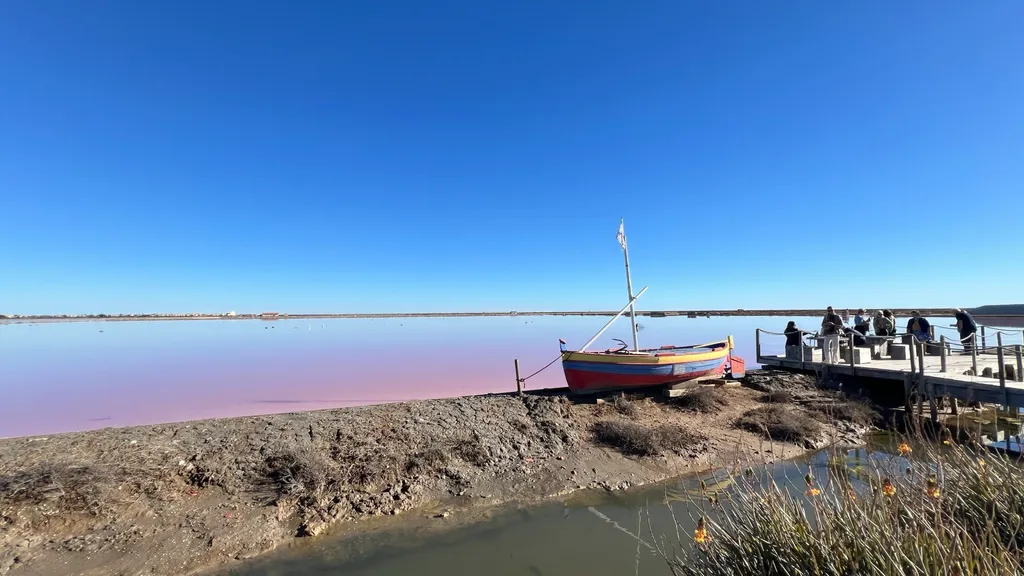
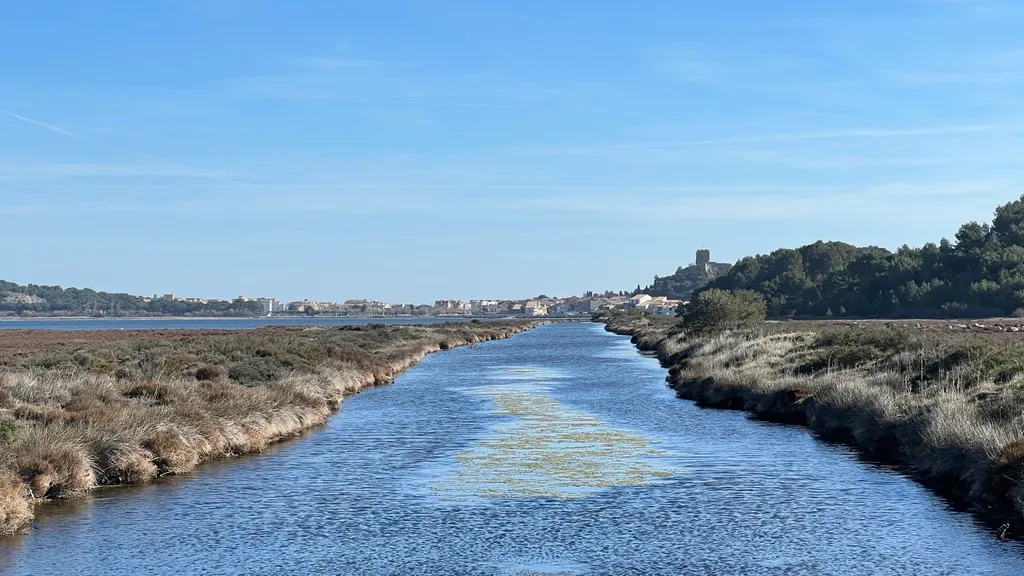
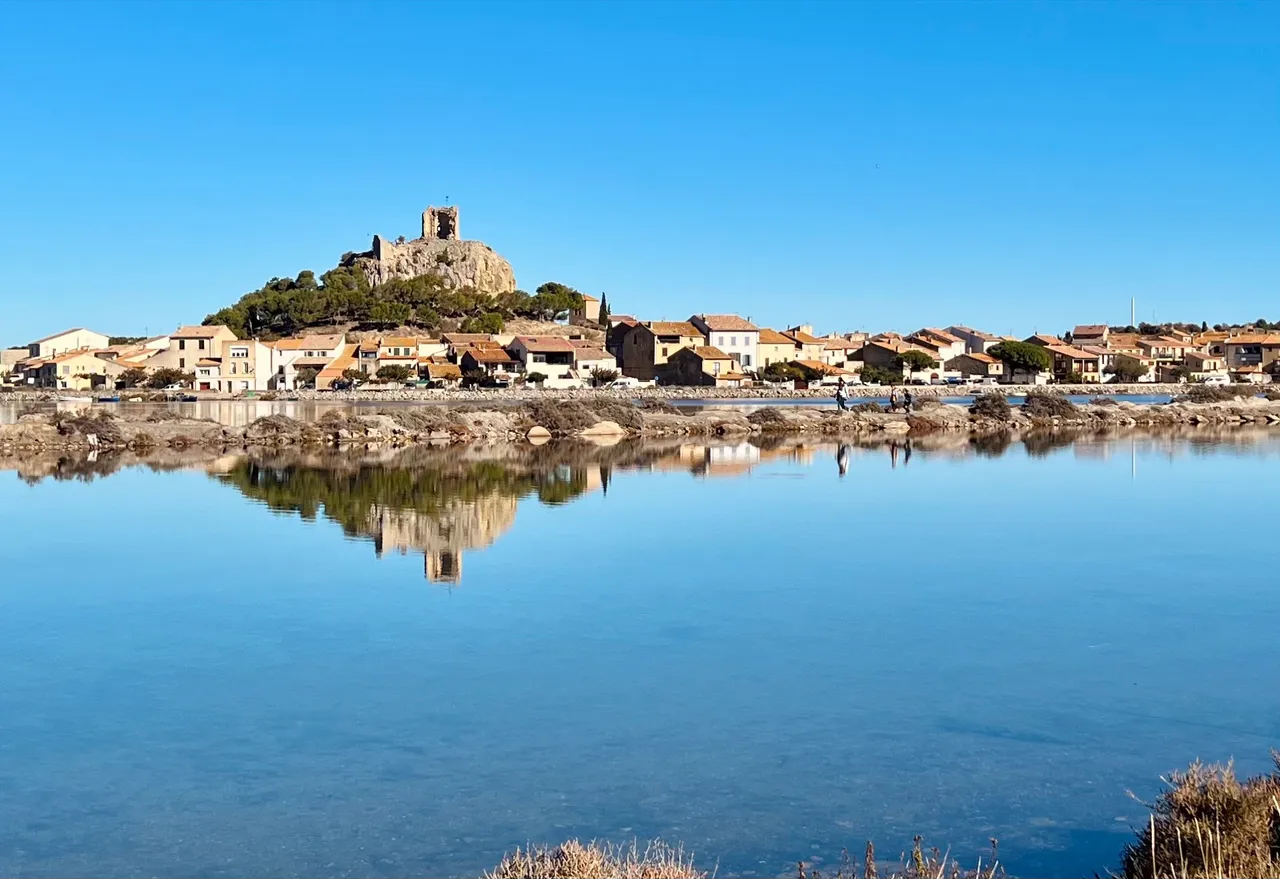
The étangs in winter: pink salt pans, still waterways — and not a soul in sight.
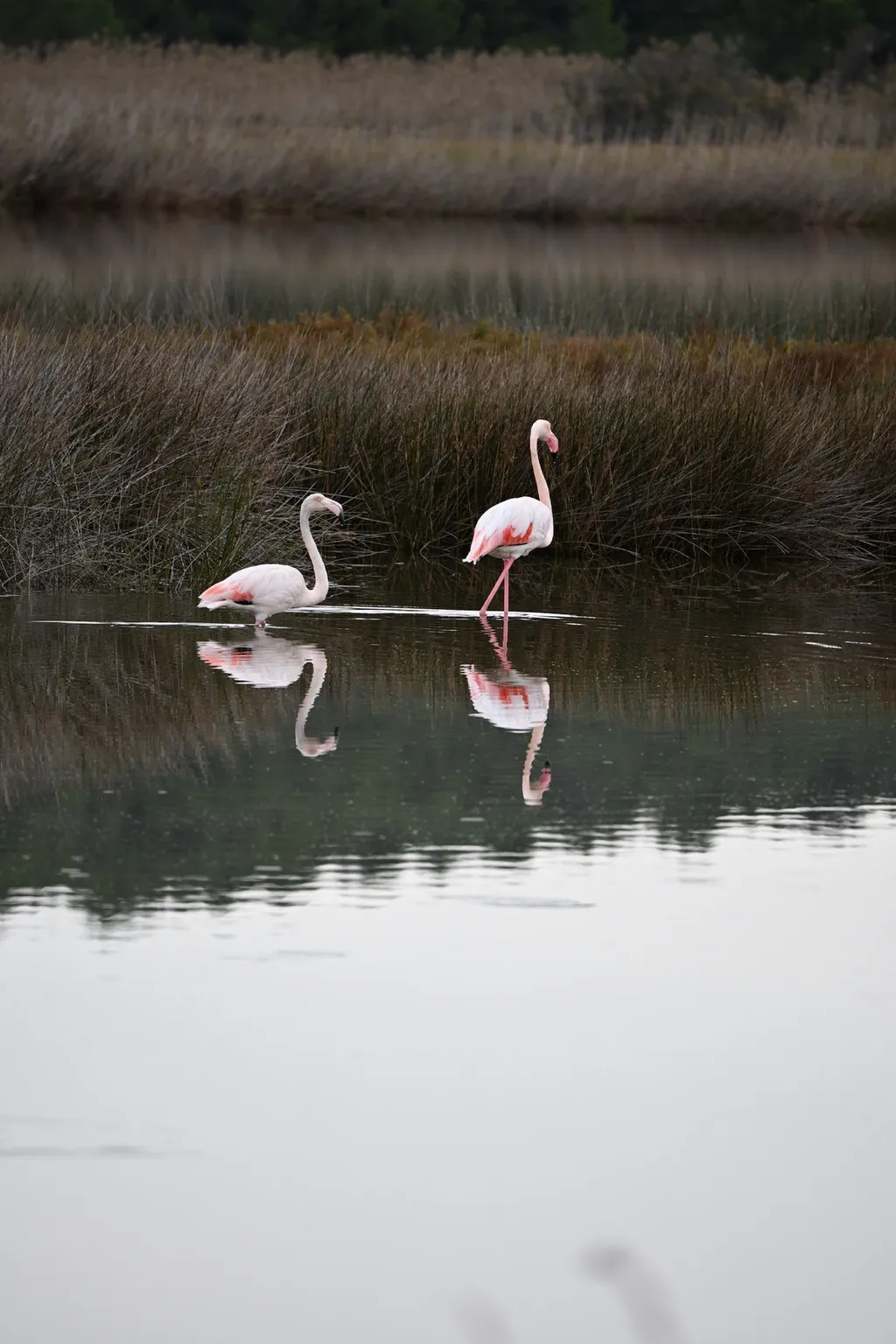
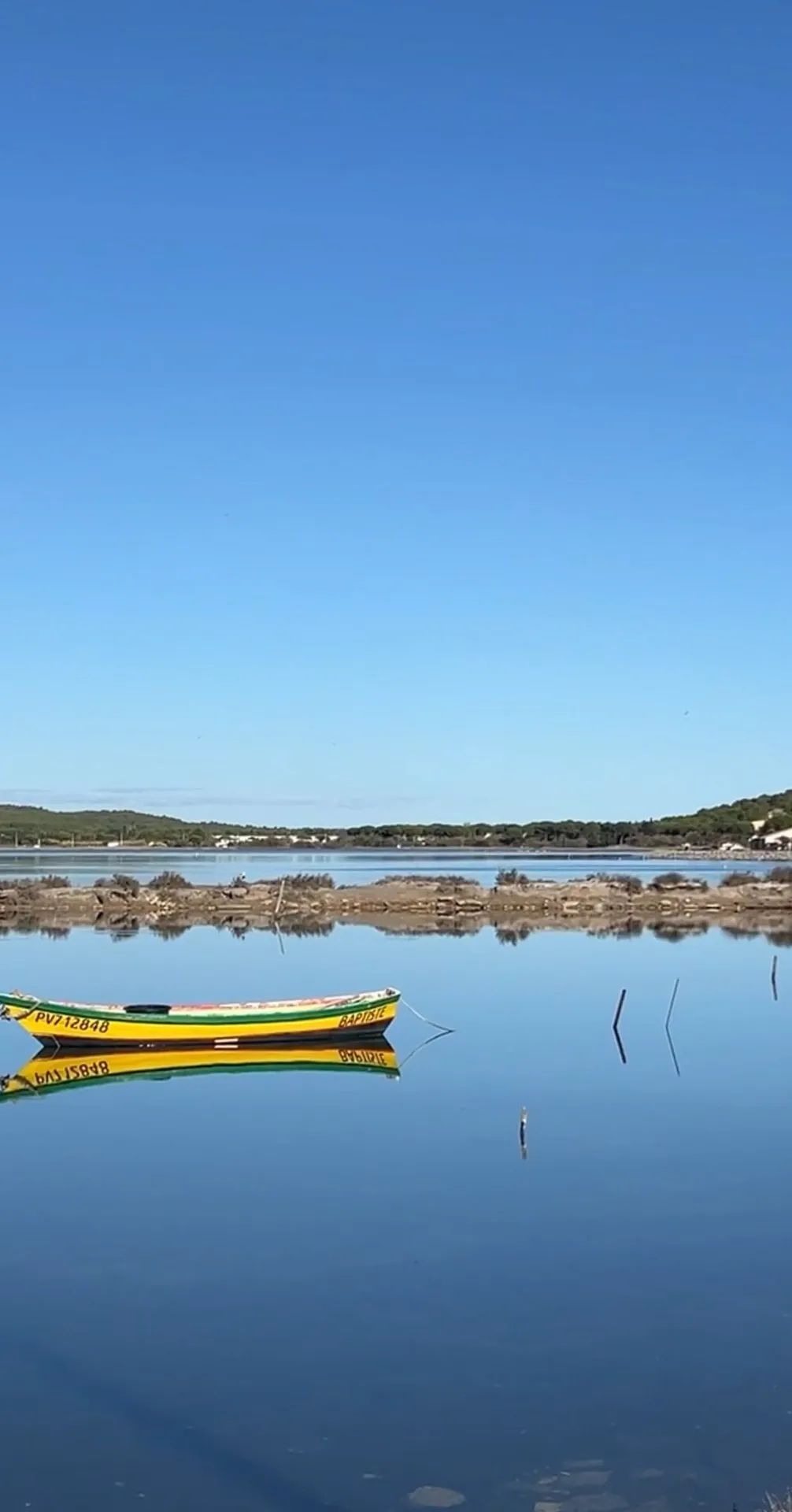
Courtship season on the étangs: from December to mid-February the flamingos are at their pinkest — and the water is often as still as this.
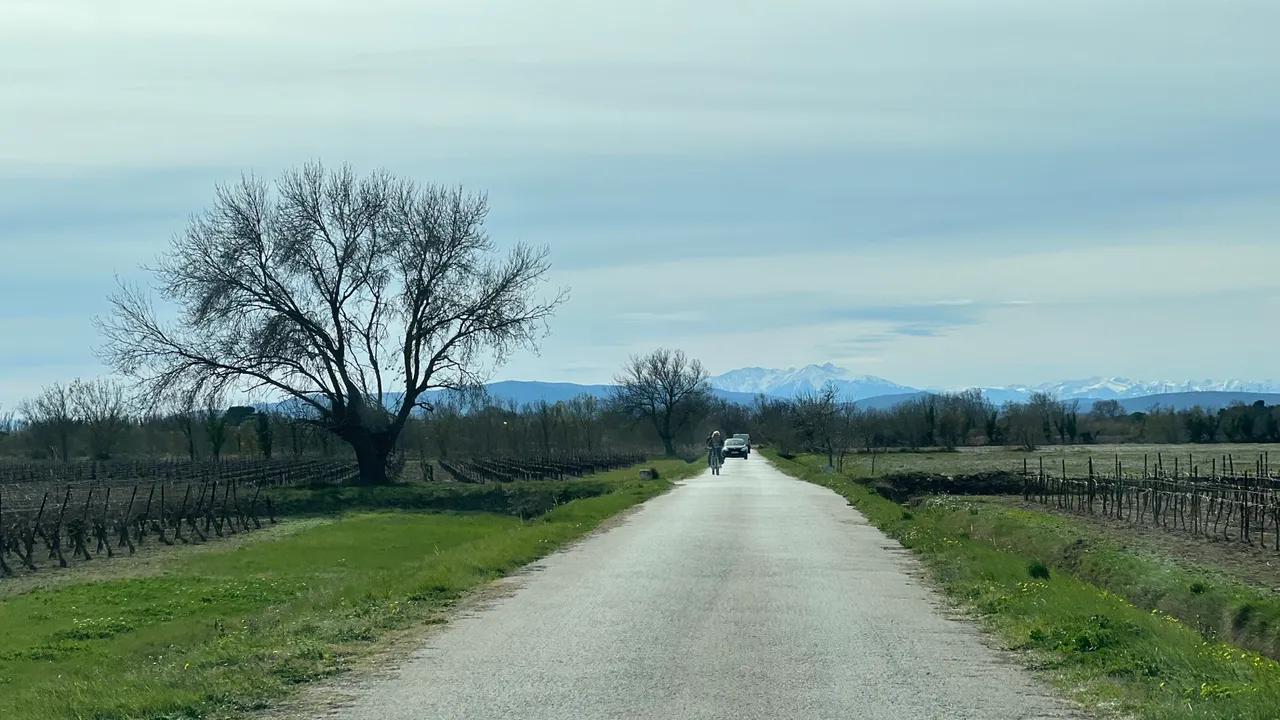
If culture is what you are after: Les Halles are open 365 days a year and become the town's living room in winter, the Roman museum Narbo Via and the Palais des Archevêques are open anyway — and the theatre and cinema run their main season from October to June; winter is anything but a pause. Even Carcassonne gets better in winter: visit the Cité in January and you will have the lanes and ramparts almost to yourself. And if you miss snow: the Pyrenees are a good two hours away — skiing in Les Angles or Font-Romeu in the morning, flamingos again in the afternoon. On clear days you can see the white peaks on the horizon from here.
Everyday life: markets, wine and slow days
Wintering is not a packed itinerary — it is a run of good ordinary days. Ours goes like this: across the big market on Thursday or Sunday, an espresso from the roastery in Les Halles and fish for the evening, then back along the canal. The wine estates of La Clape are there for you in winter too — the bigger houses daily, the smaller ones after a quick phone call, and in an empty tasting room a tasting likes to turn into a long conversation. In the evening you cook whatever the market yielded, or drive out to one of the restaurants that are open precisely because people live here in winter too.
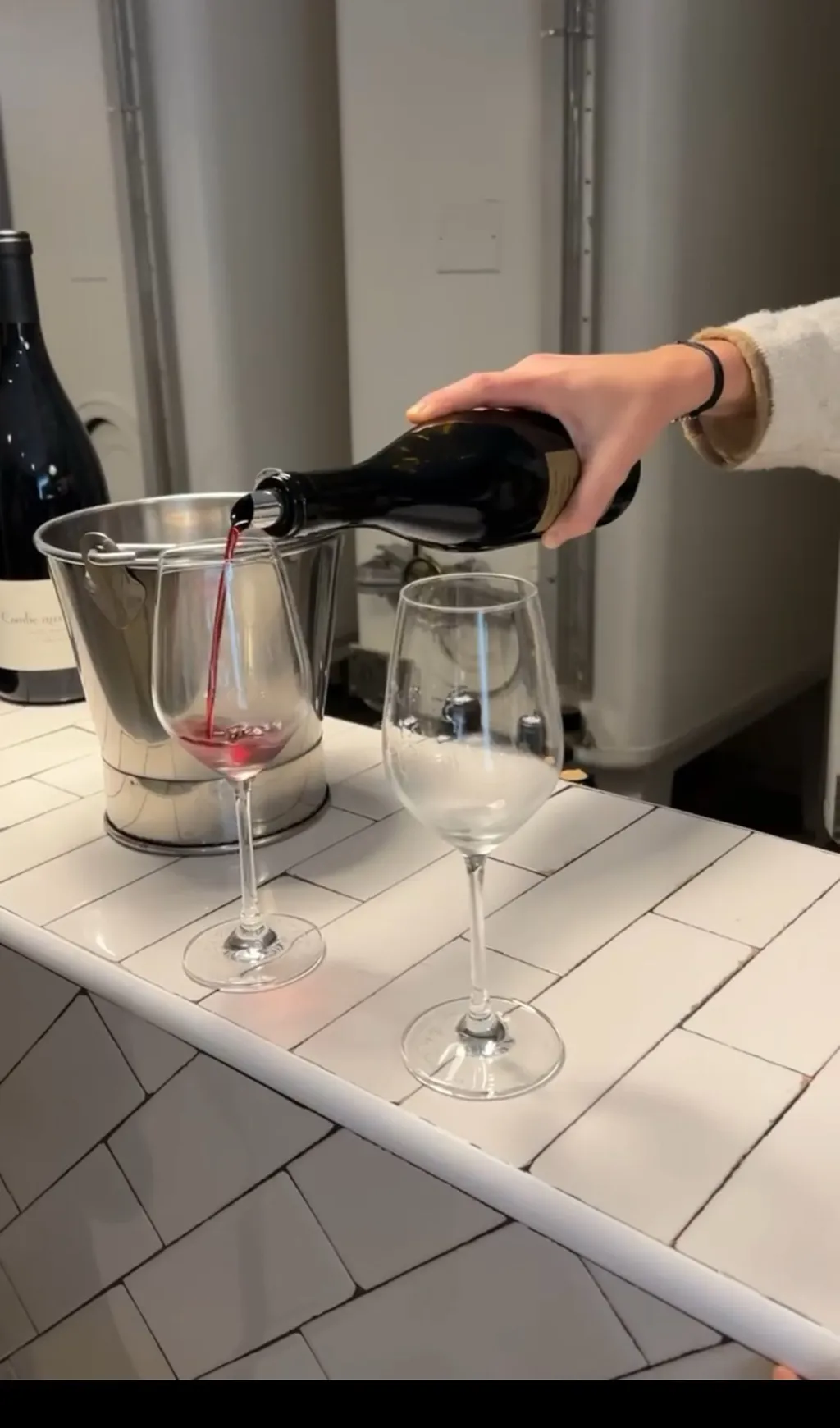
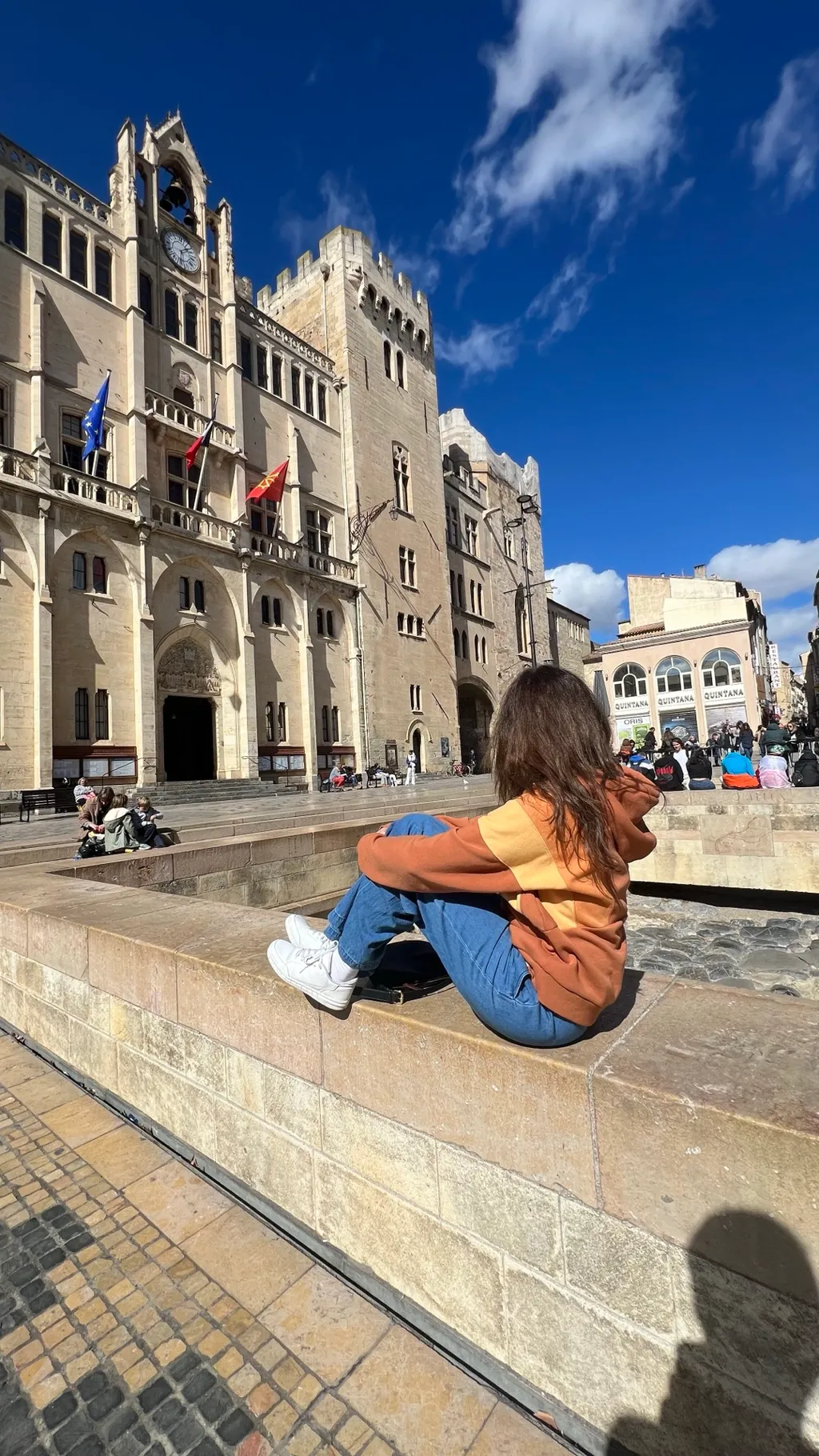
The winter routine: a wine tasting without the crowds, a stroll through town in the winter sun.
And if you are after something to keep you moving: our own pools are unheated and sleep through the winter — but two pools nearby stay open in January. At the Espace de Liberté in Narbonne, ten minutes away by car, you swim outdoors: the 50-metre pool is heated all year, and there is an indoor pool and aqua-gym classes as well. And over in Gruissan, the Espace Balnéoludique covers the wellbeing side — water at 32°C, bubble pools, sauna and hammam. For a whole winter, ask about their season passes: exactly the kind of routine that carries you through a long winter.
And if you work while you are here, you will work well: our Starlink delivers around 150 Mbps at 30 ms ping — enough for video calls back to back. If you need people around you now and then, Narbonne has coworking with day and monthly rates — the central WAW on Avenue Gambetta, say, or the big IN'ESS run by Grand Narbonne. The time zone does the rest: for guests from the UK, the working day starts an hour later here — morning loop along the canal included.
Living here in winter: two apartments, one principle
For the winter we let our two large apartments — the Penthouse with its terraces above the canal and its generous living space, and the Masterpiece with the long kitchen table and its deep, cosy sofas. Both are proper, fully heated homes, not summer quarters: complete kitchens, a washing machine, room to spread out and doors you can close behind you when one of you is working and the other is reading. The Penthouse also has a pellet stove — for the evenings when warmth should be more than just a temperature.
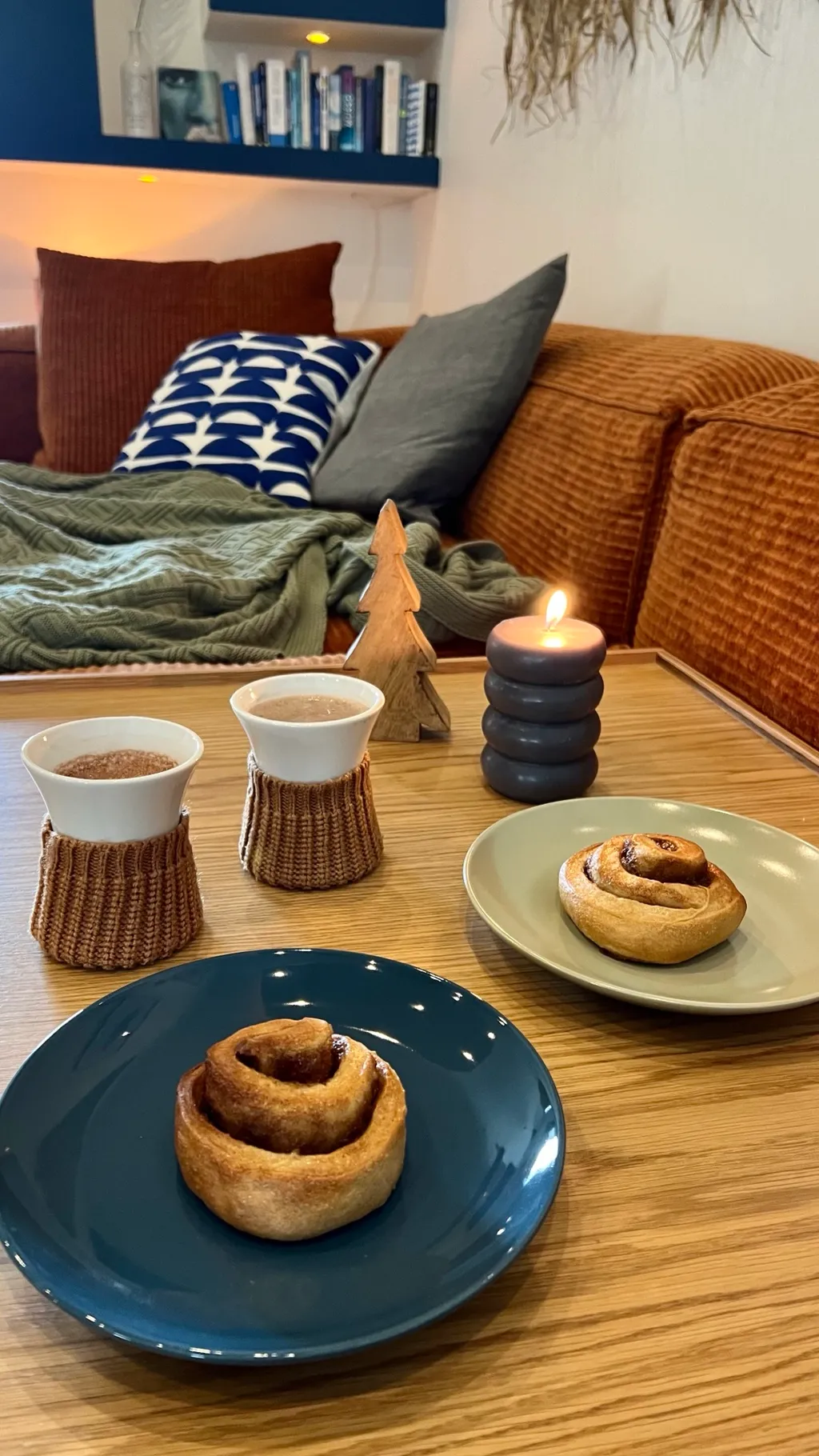
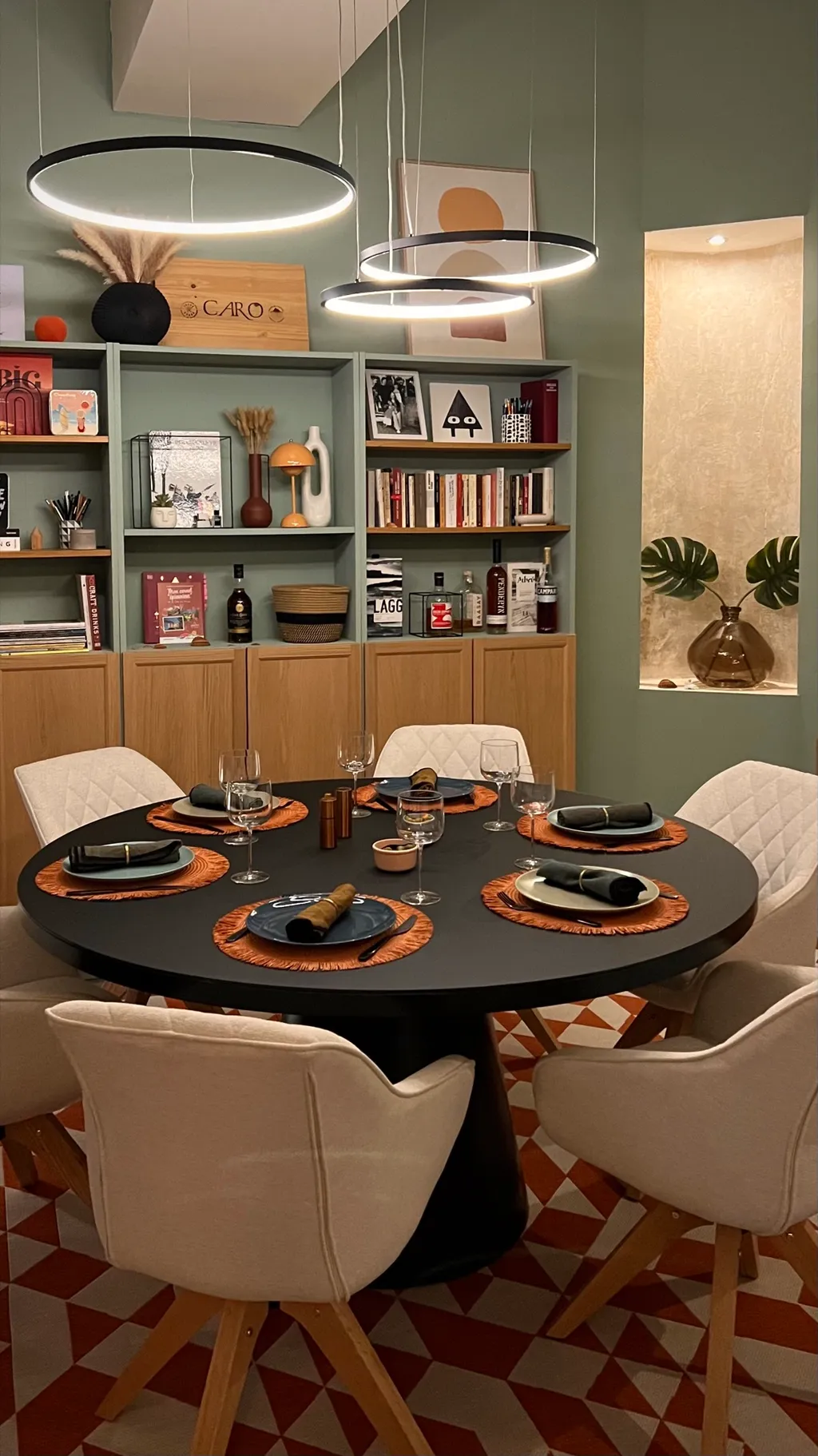
A winter evening in the Masterpiece: candlelight, hot chocolate and cinnamon buns — and the table already laid.
Two things we deliberately do differently from many long-stay landlords: heating costs are included — you heat as you need to, with no utility-bill poker at the end. And cleaning is your call: everything you need to do it yourself is there, and if you would rather have the service, the conciergerie will come to the house any time (for a fee, as often as you like). Around it, the everyday basics: parking at the house, the towpath outside the door, baker and supermarket a few minutes away by car.
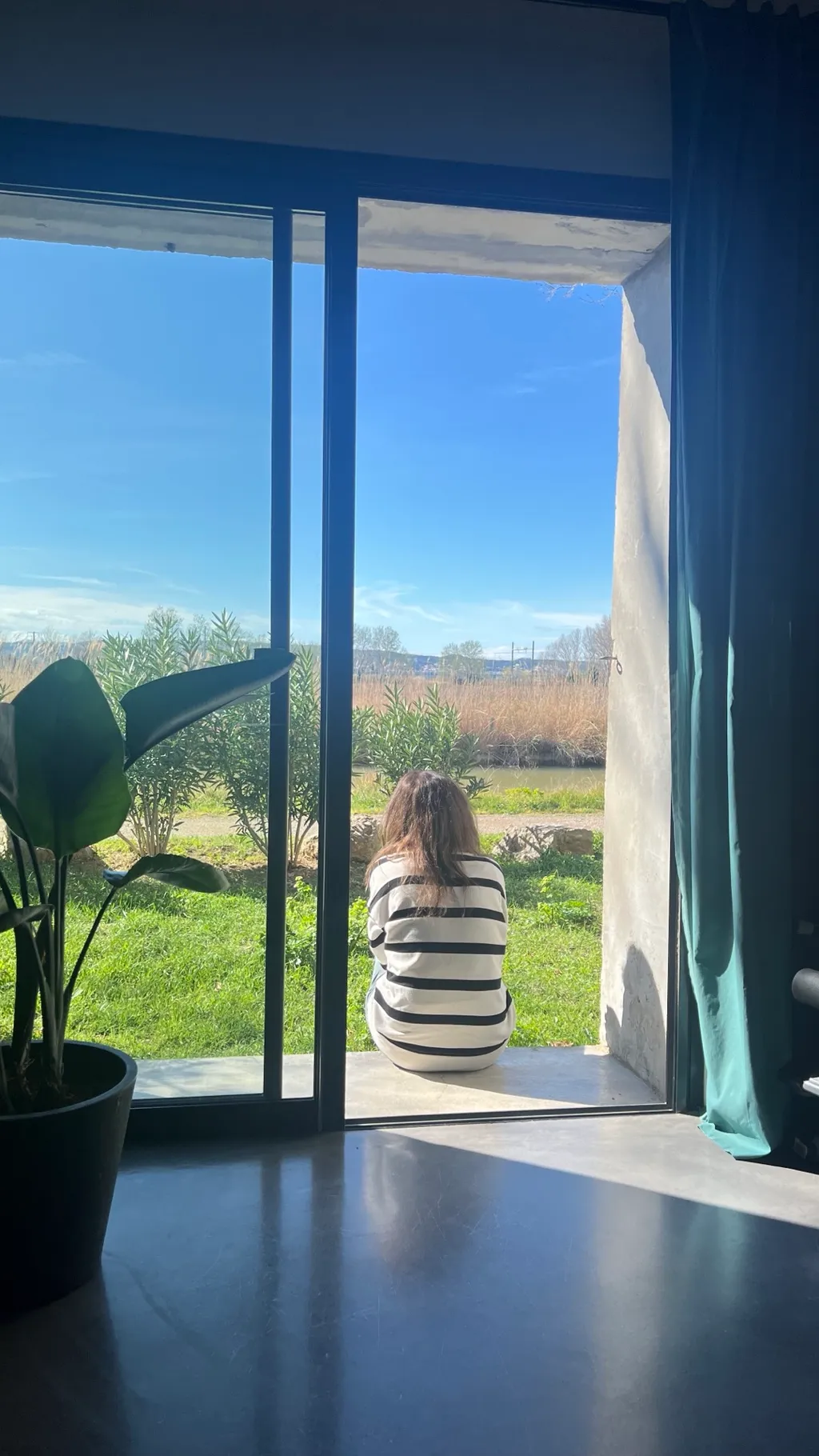
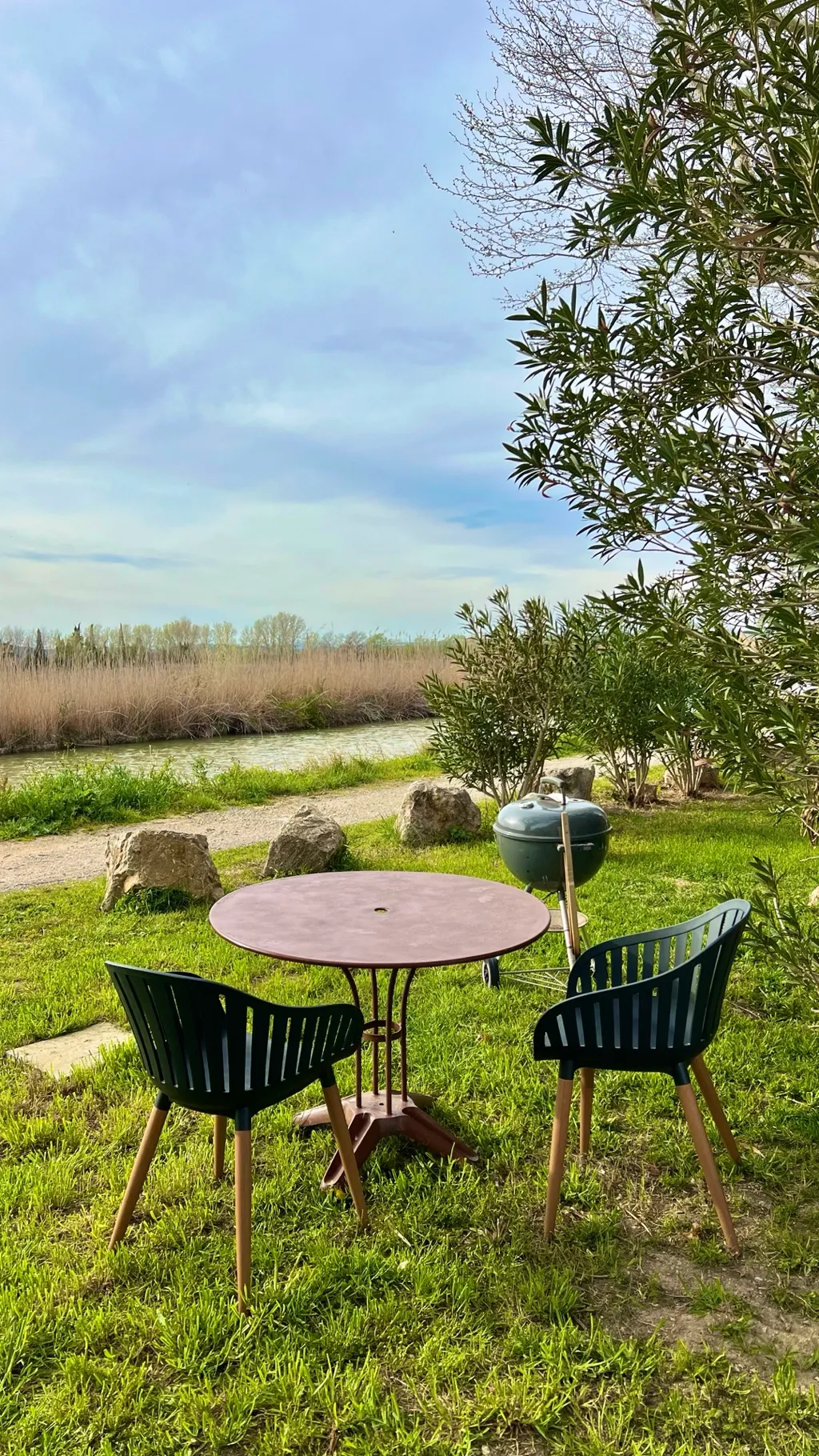
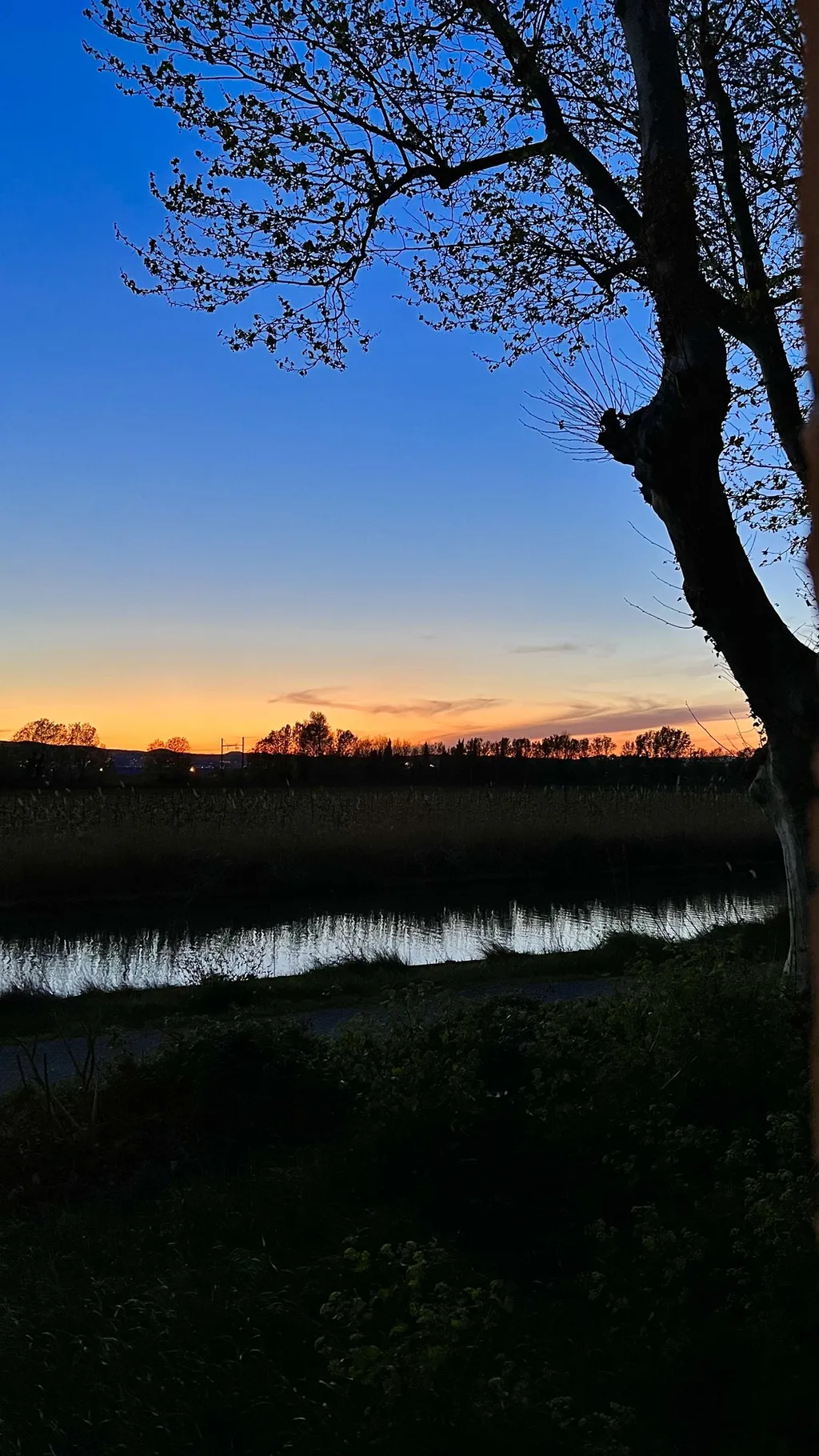
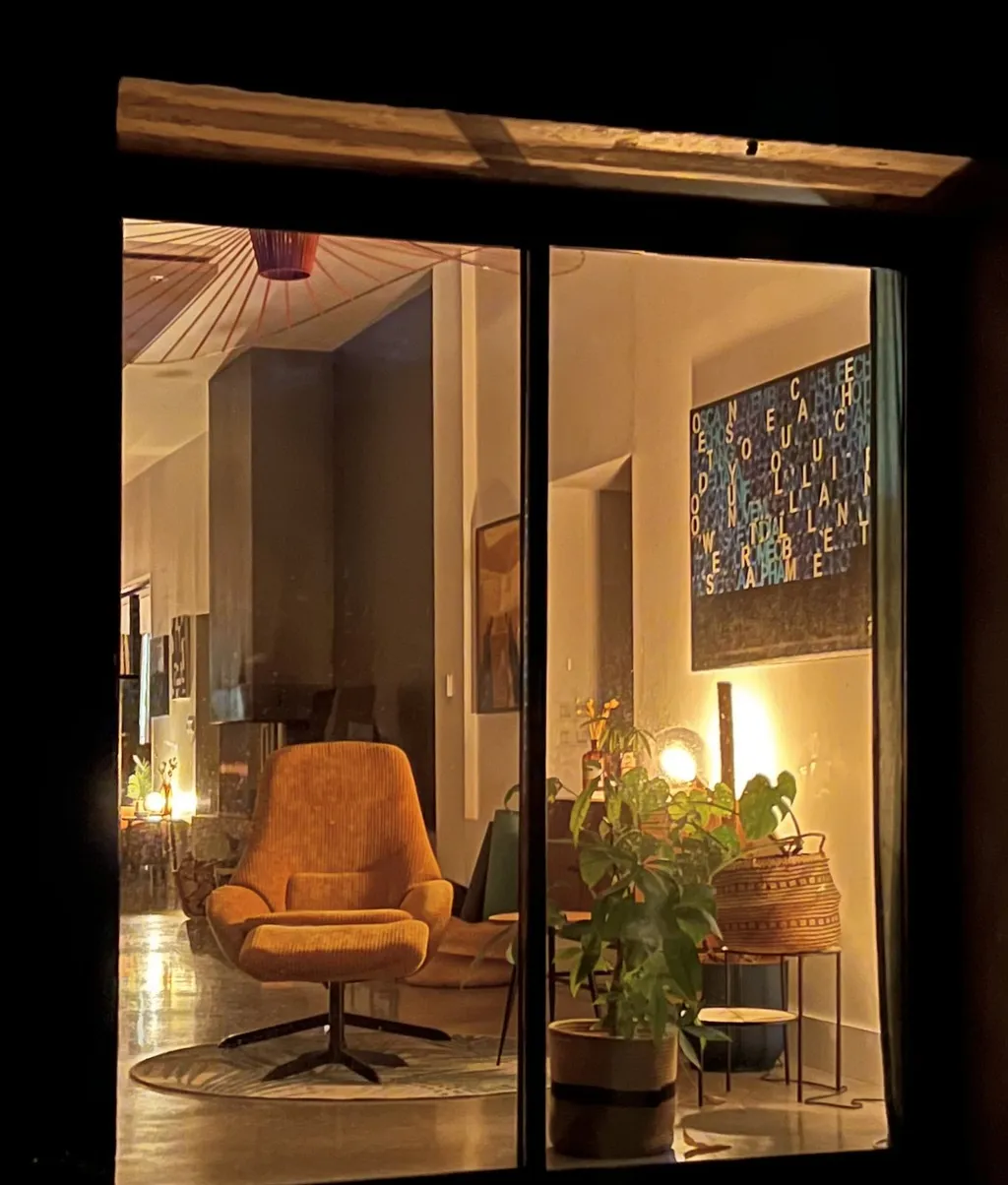
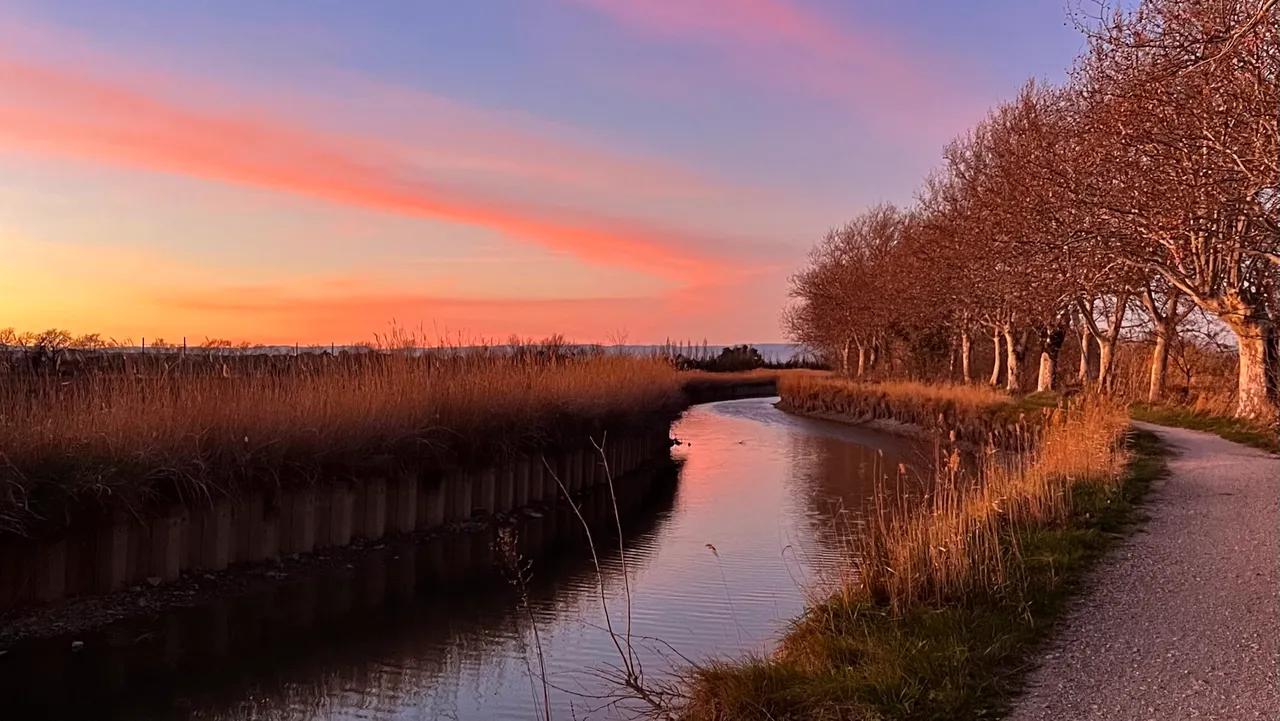
A winter day at the house: the door open and the first coffee outside in the morning, blue hour over the canal in the evening — and the lights already on indoors.
Getting here — straightforward even in midwinter
Narbonne sits on the TGV network: four and a half hours from Paris without changing, and the station is a quarter of an hour from the house. If you fly, you have six airports to choose from — from Béziers (the nearest) via Carcassonne and Perpignan to Toulouse with the most connections, in winter too; several of them have year-round flights from the UK. Details and transfer tips are on our getting-here page. And if you come in your own car, you have every freedom once you are here — there is parking right at the house.
Why enquiring directly pays off
You can book with us through the platforms like anywhere else — but for long stays their hands are tied, and so, through them, are ours. That is why winter with us is negotiable in the best sense: enquire directly, tell us your dates, and we will put together an individual winter offer for you — with a flexibility no platform can match. That is exactly how our longest guest relationship began: Lorraine came to us with a proposal, we quickly came to an agreement, and she stayed the whole winter. Those are precisely the stories we hope for.
Frequently asked questions
- How warm is it in winter, really?
- Honestly: in January it is usually 11–12°C by day, and nights can drop to 4–5°C. What sets it apart from northern Europe isn't the temperature alone but the light — Narbonne is one of the sunniest corners of France, and winter rain falls on only a few days a month, usually briefly. On a still, sunny January day you'll be sitting outside at lunchtime; when the tramontane blows it turns brisk, but afterwards the sky looks freshly swept.
- How long can we stay as Brits?
- Without a visa, up to 90 days in any rolling 180-day period — counted across the whole Schengen area combined, with arrival and departure days included. Our recommendation: 8 to 12 weeks, which leaves headroom for other European trips before or after. There is no legal "70-day limit", by the way — that figure almost always comes from the trip limits of UK travel insurance policies; it's worth a look at your own.
- Are the apartments set up for winter?
- Yes. The Penthouse and the Masterpiece are proper, fully heated homes with complete kitchens, a washing machine and fast internet — and heating costs are included with us, even on long stays. In the Penthouse, a pellet stove adds the cosy kind of warmth on top.
- How fast is the internet?
- Starlink, with around 150 Mbps down, 45 up and roughly 30 ms ping — video calls, cloud work and streaming all run without a hitch. If you'd rather work around other people, Narbonne has coworking spaces with day and monthly rates.
- Do we need a car?
- For a winter stay: yes, we'd recommend one. Town is 15 minutes by car, the beaches likewise, and the best winter days come together spontaneously — flamingos in the morning, a truffle market at midday, sunset by the sea. For a trip into Narbonne you can also cycle along the canal, in a good half hour.
- What is open in winter — and what isn't?
- The town carries on as normal: Les Halles are open 365 days a year, the theatre and cinema are in high season in winter, and the museums are open. To be fair, we should say: the beach restaurants in Gruissan and Narbonne-Plage largely close from October to March, and beach life goes quiet — in return, the beaches are all yours.
Enquire about your winter
Tell us your dates and we will come back to you within 24 hours with an individual offer for the Penthouse or the Masterpiece — heating included. We have filled in the classic ten weeks below; simply change them to your own.