
Water, trails & racing
Active around Narbonne
Narbonne has a rare combination: sea and beaches on the doorstep, a limestone massif right behind, shallow lagoons in between — and two professional leagues in the town itself. You could do sport here for ten days without repeating yourself. What we have done ourselves and what we have not is stated honestly throughout.
On the water: windsurfing, kite and wingfoil
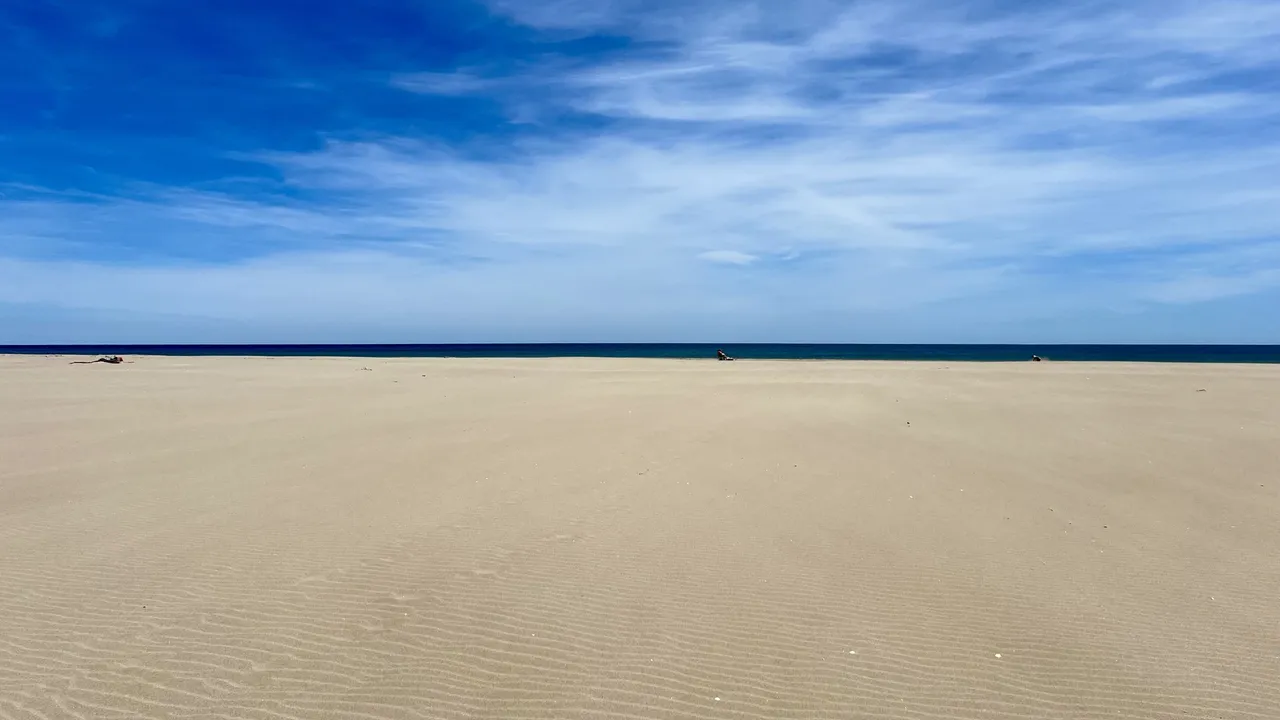
There is a reason the largest windsurfing gathering in the world happens in Gruissan: the Tramontane. It arrives dry from the north-west, makes the air crystal clear and delivers reliable power — strongest in winter and spring. In high summer it tends to visit rather than move in, and when it does turn up it takes the edge off the heat. If you are not heading for the water: by our pool you notice little of it, the terraces sit sheltered.
For anyone who does want to go out, two playgrounds lie side by side: the open sea off the Plage des Chalets, with swell and space — and behind it the shallow étangs, where you can simply stand up if it all goes wrong. That is exactly why the area works for world champions and for a first lesson alike.
The central address is Akila Gruissan, the town’s watersports base. It runs two sites: the Pôle Mer right on the Plage des Chalets for everything that needs swell, and the Pôle Étang at the Base Nautique de Mateille — waist-deep flat water, ideal for first attempts and for children. If you are more serious about it, drive 35 minutes on to Leucate-La Franqui: one of the most reliably windy spots in Europe, with schools and hire right on the beach.
One caveat about us: we surf on a board, not behind a sail. We can talk about waves and water, but not about the quality of a windsurfing course. What we can say: if you bring your own kit, you don’t need to ask anyone. You drive to the beach, rig up and you are on the water.
The big fixture: for ten days each spring the Plage des Chalets belongs to the Défis: Défi Kite, Défi Wing and finally the Défi Wind, the largest windsurfing gathering in the world — professionals and amateurs start together on one single line. In 2027 from 30 April to 9 May. Watching is free and spectacular. There is more on it in our Gruissan article.
Sailing, kayaking and stand-up paddling
The quieter side of watersports happens on the étangs, and the best place for it sits right outside Narbonne: Port La Nautique on the Étang de Bages-Sigean, home of the Société Nautique de Narbonne with a sailing school open all year. Shallow water, a bird reserve, ten minutes by car from us — and in the evening the dinghies stand against the low light.
Canoes, kayaks and SUP boards can be hired on the same shore at La Nautique — by the hour or the half day, canoes for children from the age of five, and outside the summer holidays too. If you would rather practise in hip-deep flat water, head for the Base de Mateille in Gruissan: Akila's Pôle Étang hires out kayaks and boards there from April to November.
Electric boat on the canal — the family tip
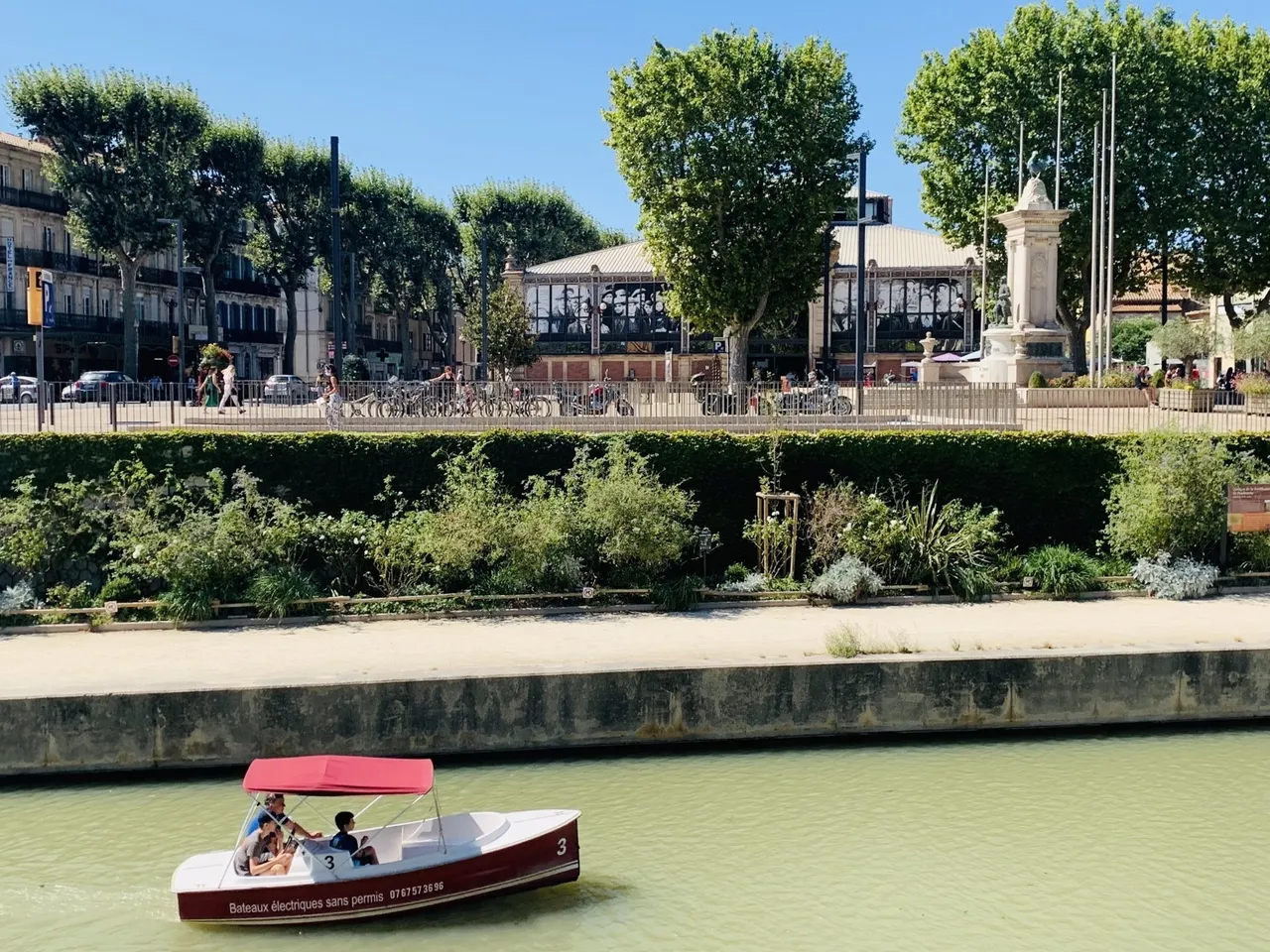
The best part of this outing: it can start entirely car-free — by bike along the towpath you reach the jetty in the middle of town in half an hour, a few minutes on foot from the Halles. At the Promenade des Barques, Les Petits Bateaux du Canal hire out small electric boats that need no licence — quiet, slow, child’s play. You putter under the Pont des Marchands, past the Halles and out of town towards the vineyards. The season runs from April to September. For a calm afternoon with children this is our very first recommendation. And if you would rather ride along than steer yourself: from the same bank, the wooden gabare Le Solal casts off — a replica of a 19th-century cargo barge, one hour of commented cruising including a lock passage, from April into October.
Sand yachting and diving
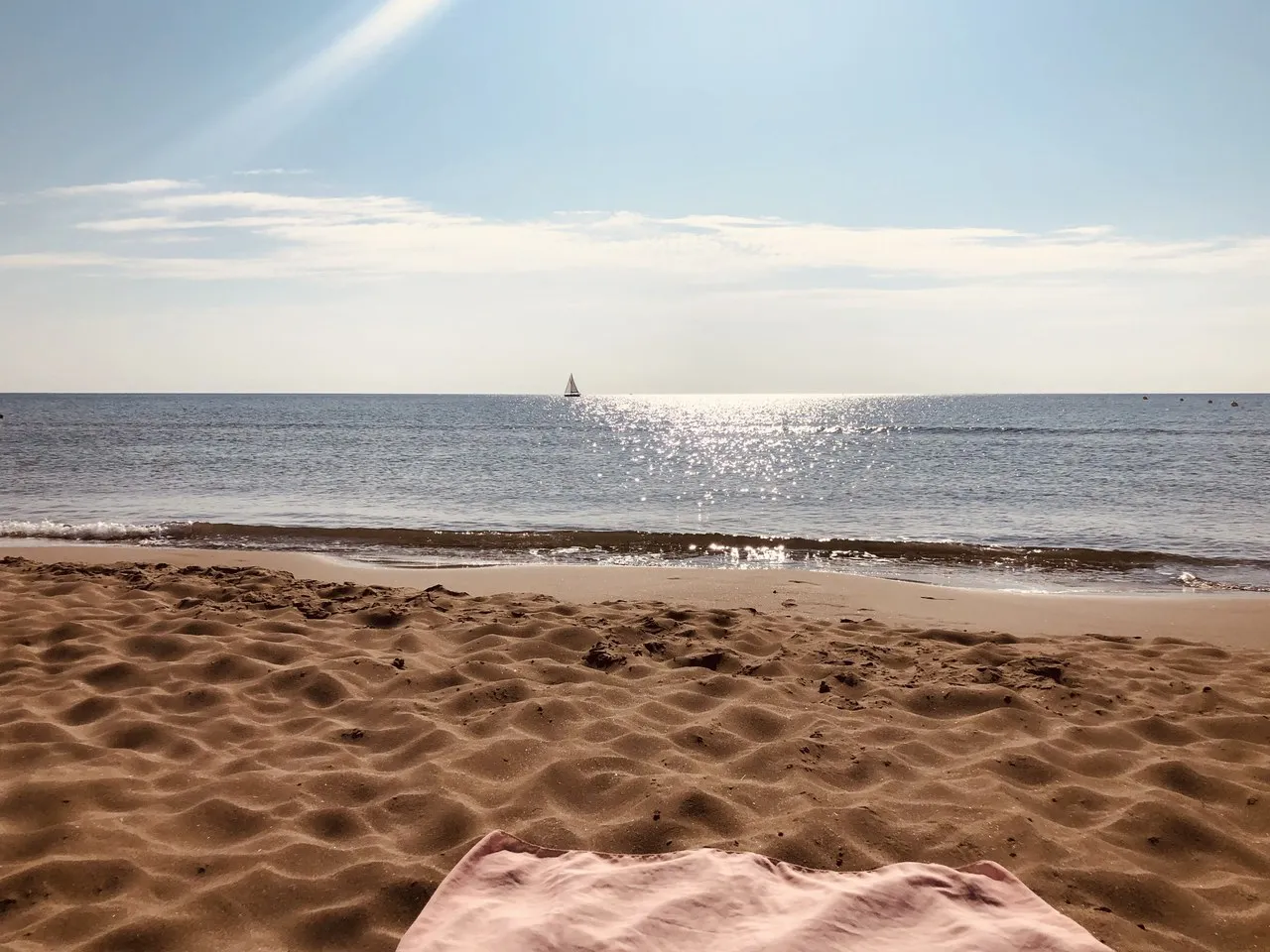
On the beach at Narbonne-Plage, Zef Control offers char à voile — sand yachting on three wheels, which is most fun precisely when everyone else is clearing the beach. For diving, the address in Gruissan harbour is Europlongée; the more spectacular sites, though, lie further south on the Côte Vermeille, in the marine reserve off Banyuls. Same rule here: no verdict from us, we have not dived here.
On foot: La Clape, the étangs and the coast
Gruissan has six officially waymarked walking trails; the map is available at the Office de Tourisme. Two of them are open even in high summer because they lie outside the forested massif. The first is the Tour de l’Étang around the Étang de Gruissan: flat, with wooden boardwalks across the water and flamingos in sight — it starts at the car park on the D32 at the edge of the village and runs into Gruissan. The second is the Sentier des Goules across the Île Saint-Martin. Inside the massif itself the loveliest path climbs to the Chapelle Notre-Dame des Auzils with its sailors’ cemetery — spring and autumn, usually closed in summer.
Flat, short on shade and walkable all year are the paths along the lagoons: the boardwalks of Peyriac-de-Mer, a wooden walkway straight across the old salt pans, and the long-distance GRP Sentier du Golfe Antique, which circles the Étang de Bages-Sigean and starts in Narbonne itself. On the Île Sainte-Lucie near Port-la-Nouvelle there is a loop through a regional nature reserve — though from mid-June to mid-September the same fire rule applies there as in the massif. If you like cliffs, drive to the Falaises de Leucate: limestone edge, lighthouse, wind — the most spectacular coastal path in the area.
Important in summer: the Aude prefecture can close the forested massifs because of wildfire risk — this mainly affects La Clape, Fontfroide and the Île Sainte-Lucie. In 2026 a continuous closure ran from 3 July to 31 August. Whether and where anything is closed is published daily at risque-prevention-incendie.fr/aude — the forecast for the next day goes online each evening after 6 pm. What counts in the end is always the signage on site. None of this affects the paths along the étangs, the canal and the coast.
Running
Running here needs no planning at all: the towpath along the Canal de la Robine starts right outside the door — car-free, dead straight and without any real gradient. You step out, turn left or right and run as far as you like. In summer, go early.
If you want a race number: the most approachable race in the region is the Foulées du Parc in October: 5 and 10 kilometres, flat and fast, in the middle of Narbonne. The loveliest is La Saline in May — ten kilometres through the salt gardens of Gruissan, along the pink basins and over the tip of the Île Saint-Martin. The hardest is the Trail de Fontfroide in March, with four courses up to 55 kilometres and 2,000 metres of climbing, starting and finishing at the Cistercian abbey; the races regularly sell out months in advance.
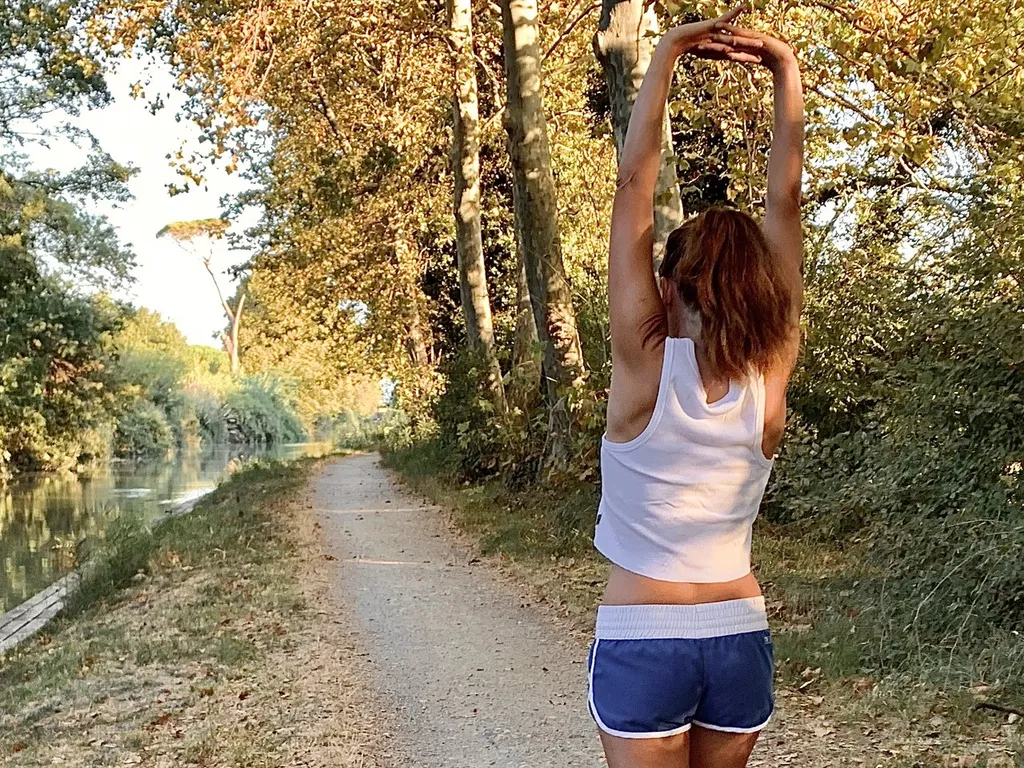
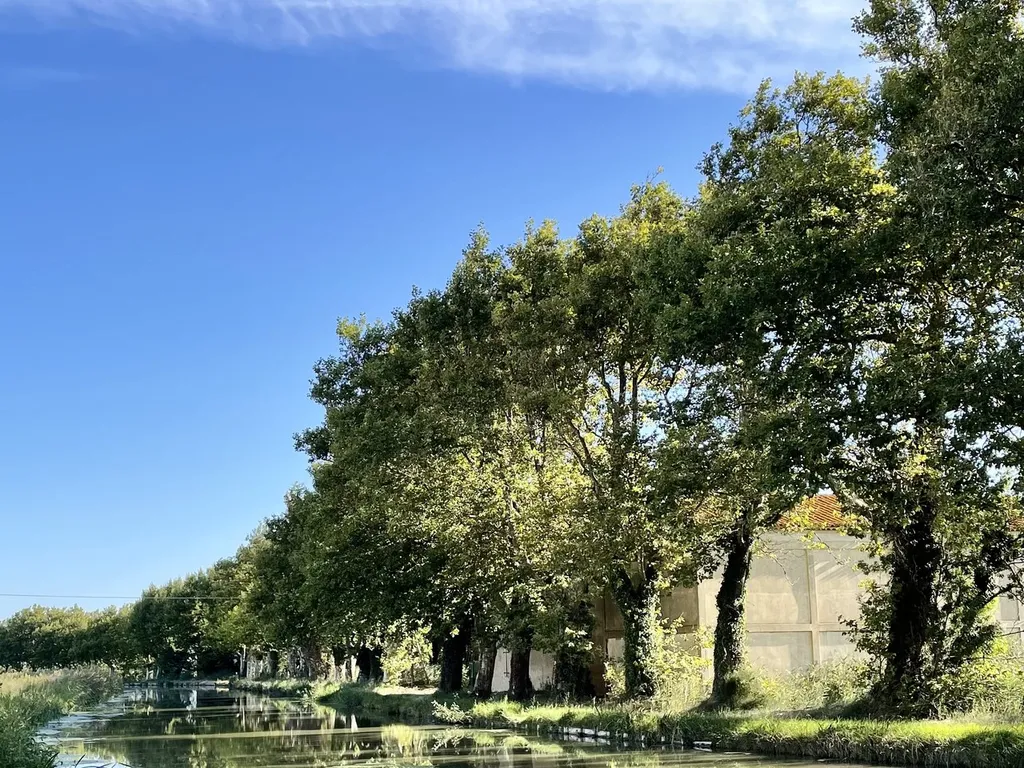
The towpath starts right outside the door — flat, car-free, shaded in the morning.
There is, incidentally, no marathon in Narbonne — we mention it because you can read otherwise online. For a long road distance you have to look further afield.
Cycling
That has an article of its own, because there really is a lot to say: the car-free towpath along the Canal de la Robine, the loop through the massif, the local climb Côte de la Couleuvre with its elevation profile, the official Espace VTT-FFC for gravel and mountain bike, hire and bike storage. It is all in our cycling article.
Fishing
One answer up front that surprises many people: you need no fishing licence for the sea in France — and because the étangs count legally as sea, none there either. Since February 2026 anyone aged 16 or over fishing in the Mediterranean does have to register once: free of charge, valid twelve months, via the RecFishing app or Catchmachine. Best done on arrival day.
The Canal de la Robine outside the door is a different matter: fresh water, so a carte de pêche is required. You buy it online at cartedepeche.fr — département 11 - Aude, association NARBONNE BP, week or day card, printable straight away — and if you travel without a printer, COPYPrint in the town centre handles it on weekdays. But: along the 14 kilometres through Narbonne a no-kill rule applies, and fish from there must not be eaten anyway. Fishing the canal means catch, photograph, release — and its flat towpath is one of the most relaxed places to head out with children.
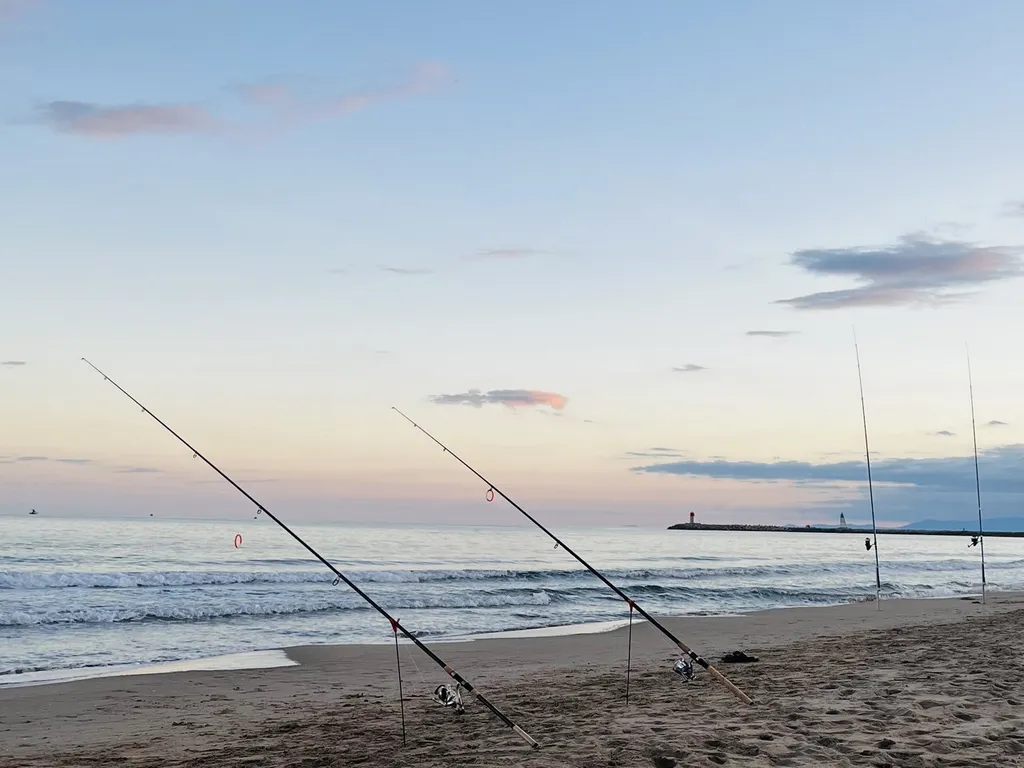
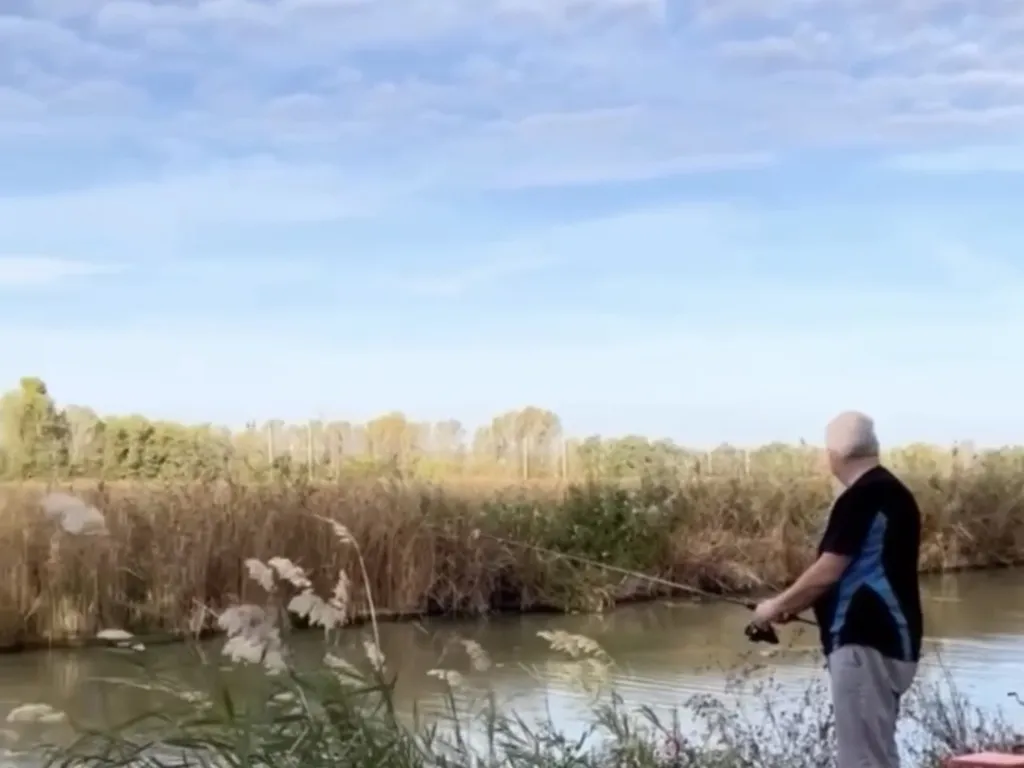
Two worlds: surf on the sea, quiet on the canal.
Without a boat, the best spots are the jetties at Gruissan and the beach at Narbonne-Plage; the Gruissan tourist office arranges guided trips with tackle provided. Two more things: eel is off limits all year, and fishing pauses on supervised beaches during the day.
There is one speciality right outside our door, though: carp fishing at night. Everywhere else in France, fishing is limited to the window from half an hour before sunrise to half an hour after sunset — along these 14 kilometres it is not. You sit on the bank with a lamp and wait.
Watching: two professional leagues in town
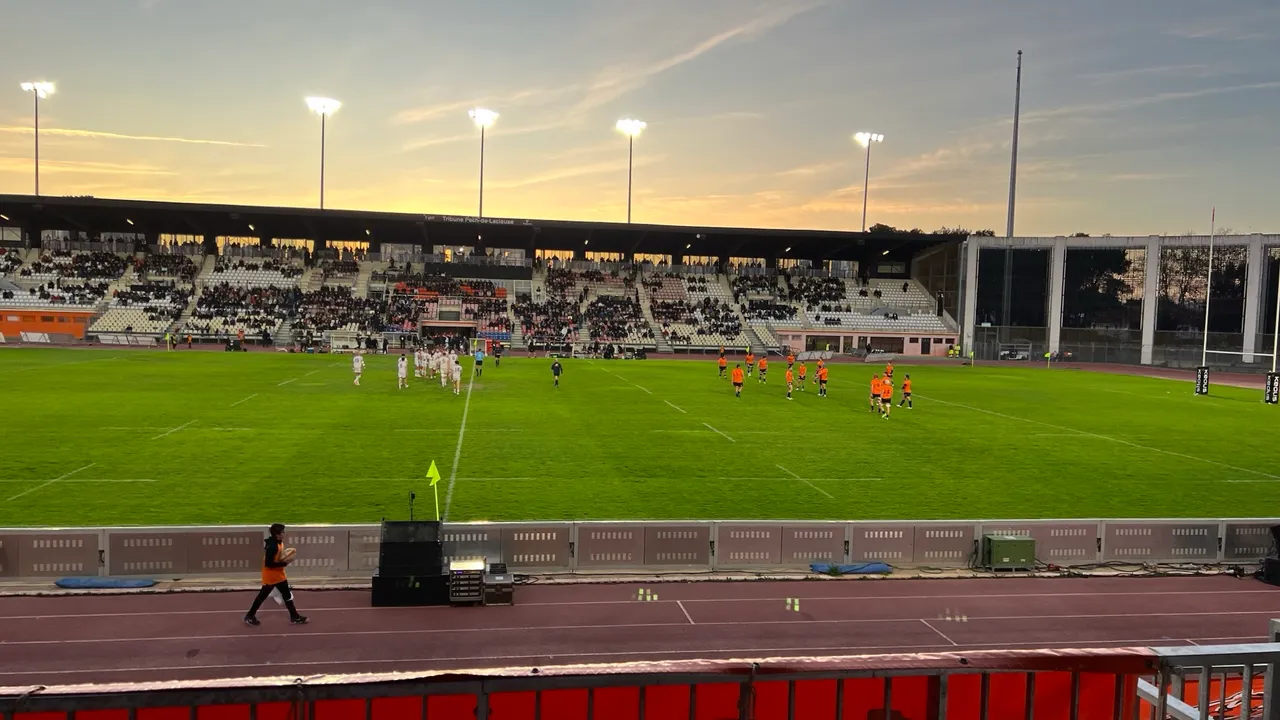
Professional sport can be watched here too — both venues are a good ten minutes from us by car. Rugby: RC Narbonne — twice French champions, record holders of the Challenge Yves du Manoir with nine titles — were promoted in May 2026 and have been back in the Pro D2, the second tier of French professional rugby, since the 2026/27 season. Kick-off is usually Friday evening or Saturday afternoon; tickets come from the club or from the box office, which opens two hours before kick-off. The fixture everyone here has circled is the derby against Béziers, 25 minutes away — back in the same division since promotion and therefore the local rival again. The home game falls in April 2027.
Volleyball: Narbonne Volley, the “Centurions”, play in the Ligue A — the top division — in an arena of around 3,600 seats with free parking outside. For guests this is the easiest way into French professional sport: short distances, a loud hall, season from October, home games usually on Saturday evenings.
And one rarity, 45 minutes away: in Carcassonne, the Stade Albert-Domec hosts rugby à XIII — rugby league, a sport of its own with thirteen players, rooted in France almost exclusively in the Aude and the Roussillon. Carcassonne XIII play in the top division.
When the big races come through
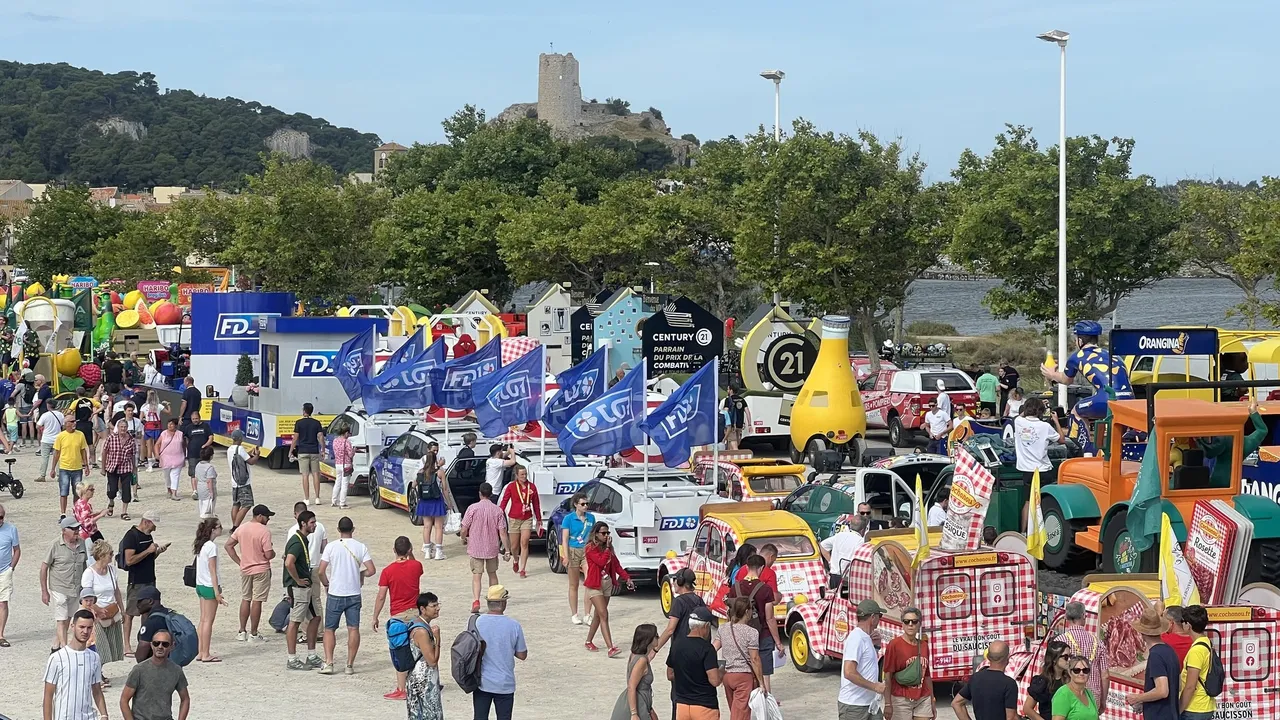
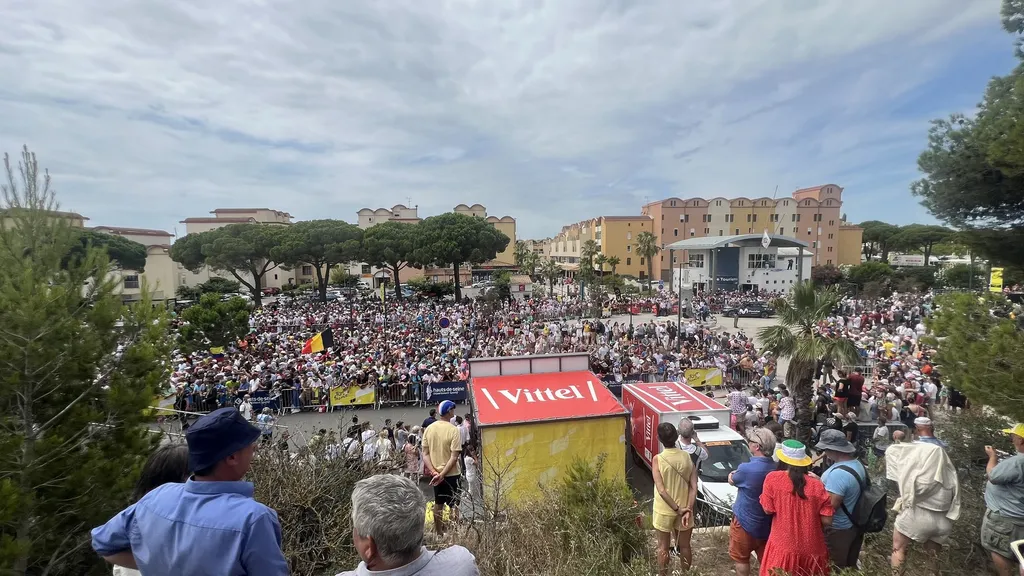
Within three years, top-flight cycling has stopped right around our corner twice. In July 2024 the Tour de France started a stage in Gruissan — after the rest day the riders spent there. We were there, and it was the first stage start we had seen live: the publicity caravan across the village square, team buses between the palm trees, the teams signing on one after another, a few thousand people behind a barrier that usually leads to the beach.
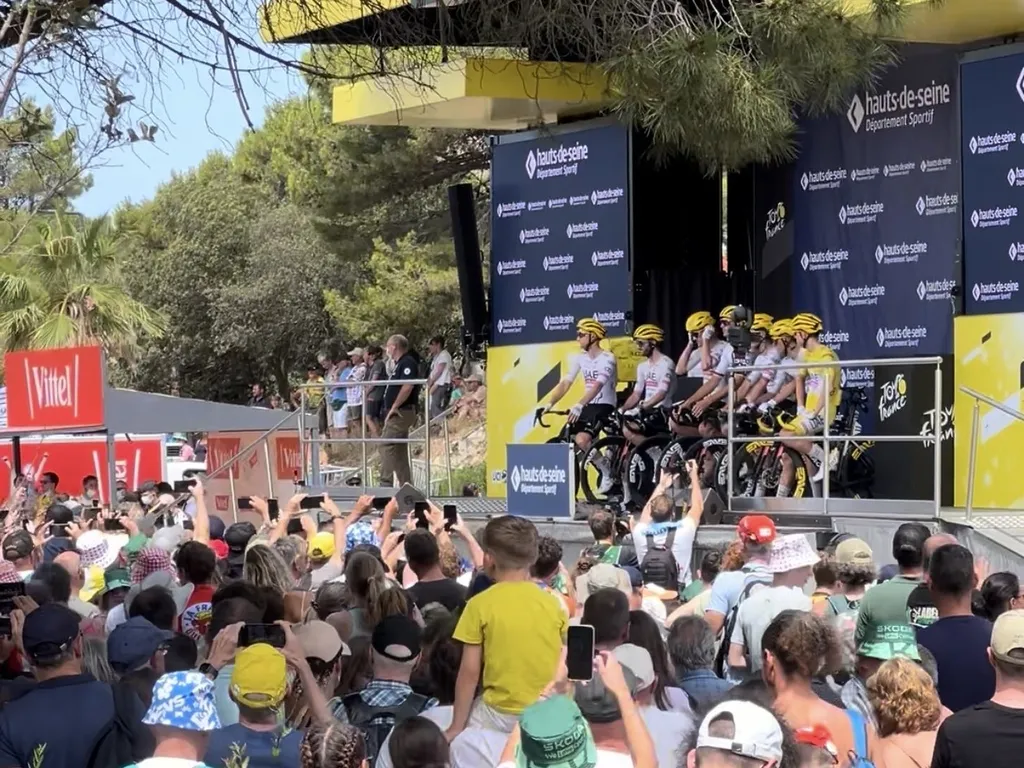
And then came the Vuelta: on 24 August 2026 stage three of the Vuelta a España started in Gruissan, heading for the Pyrenees. Two grand tours in three years with a stage start in the next village along — what that means for a place this size is in our Gruissan article. Either way, we check the route presentation every autumn to see whether it is happening again.
Beach rugby, beach volleyball — and the New Year’s dip
For four days in July the Plage des Chalets becomes France’s largest beach rugby tournament: around 180 teams, over 2,000 players, music into the night. August brings the town’s Open Beach Volley with about a hundred teams on thirty sand courts. Both are free to watch — and both are a good reason to pick a different stretch of beach on exactly those days if what you actually wanted was quiet.
Our own favourite date, though, is in winter: the Bain du Nouvel An on 1 January. Around eleven o’clock a few hundred people gather at lifeguard post 1 on the Plage des Chalets, many in costume, there is a fancy-dress judging, then everyone goes into the Mediterranean together, and afterwards there is mulled wine and a certificate. The water is around thirteen degrees. It is exactly as silly and exactly as lovely as it sounds.
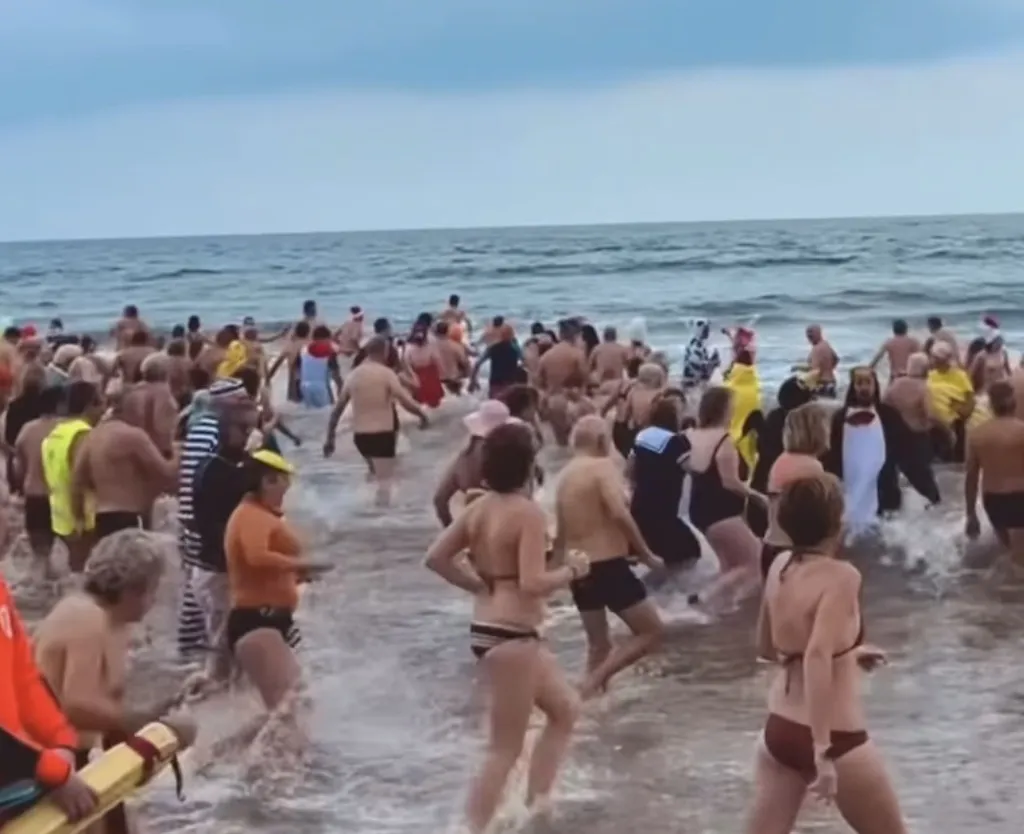
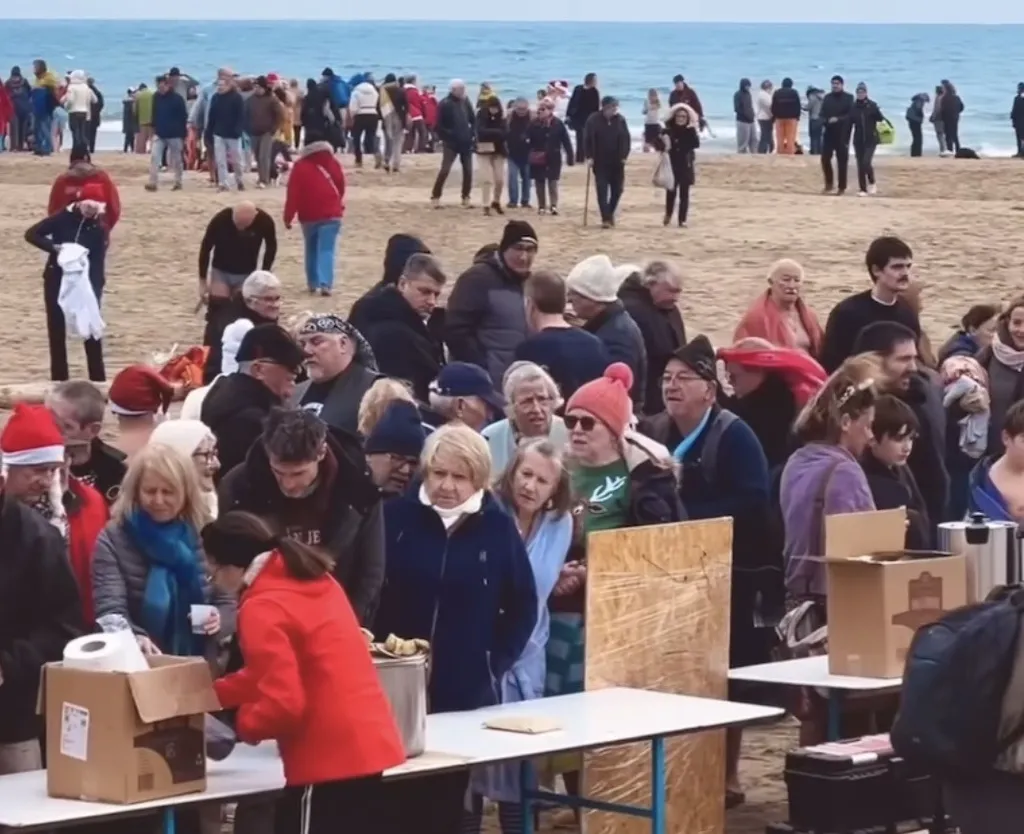
Bain du Nouvel An, 1 January. First the water, then the mulled wine.
The sports calendar
Every recurring fixture at a glance. Where a specific date is given, the organiser has confirmed it; otherwise we give the usual window — the exact days are published each year on the organisers’ own pages.
| Month | What | When |
|---|---|---|
| January | Bain du Nouvel An — New Year’s dip in the Mediterranean, Plage des Chalets, Gruissan | always on 1 January, around 11 am |
| March | Trail de Fontfroide — Four trail courses from 10 to 55 km, starting at Fontfroide abbey | 13 March to 14 March 2027 |
| April | Course des Étangs de la Narbonnaise — 14 km trail run from Narbonne into the lagoon landscape | usually on a Sunday in early April |
| April | Mondial du Vent — Wingfoil, windsurf and parawing world cups at Leucate-La Franqui | usually on the third weekend in April |
| April | Triathlon de la Côte du Midi — Season-opening triathlon at Narbonne-Plage, swimming in the Mediterranean | usually on the last weekend in April |
| May | Défi Kite, Défi Wing & Défi Wind — Ten days of watersports in Gruissan, closing with the world’s largest windsurf gathering | 30 April to 9 May 2027 |
| May | La Saline — 10 km trail run through the Gruissan salt pans | usually on a Saturday in mid-May, starting late afternoon |
| June | Trail de l’Abbaye de Lagrasse — Evening run over 5, 9 and 15 km through the Corbières | usually on a Saturday in mid-June, starting early evening |
| July | Gruissan Beach Rugby — France’s largest beach rugby tournament, around 180 teams | usually on the last July weekend, over four days |
| August | Open Beach Volley de Gruissan — Around 100 teams on thirty sand courts at the Plage des Chalets | usually on the second August weekend |
| October | Les Foulées du Parc — 5 and 10 km, flat and fast, in the middle of Narbonne | usually on a Sunday in mid-October |
| October | Grand Raid des Cathares — Ultra trail from Carcassonne, plus a 12 km night trail around the Cité | usually on the last October weekend |
| December | Gruissan Trail (GSE) — Six formats from 8 to 50 km in the regional nature park | usually on the first December weekend |
Also possible — without a verdict from us
None of this have we tried ourselves. We list it anyway, because guests ask — but without a recommendation and without judgement:
- Golf Pitch and Putt Sainte-Rose — the only golf course in Narbonne itself, ten minutes from the centre, open all year. The full 18-hole courses are near Béziers and Carcassonne.
- Tennis — the Tennis Club de Gruissan on Rue du Forum has seven outdoor courts, one covered court and two padel courts, and says it rents them to non-members too; Narbonne has several clubs of its own, among them the Tennis Club de Narbonne on Rue Mazzini. Worth a phone call in advance.
- Centre de Tourisme Équestre Les Ayguades — rides between Gruissan and Narbonne-Plage, all year, booking required.
- Espace de Liberté du Grand Narbonne — the region’s leisure and swimming centre on the Route de Perpignan: a 50-metre outdoor pool (heated all year), an indoor pool, slides and aqua-gym classes. Open year-round.
- Espace Balnéoludique in Gruissan — a 25-metre sports pool plus a wellbeing area with water at 32°C, bubble pools, sauna and hammam; in summer a leisure pool as well. Open outside the season too, though the hours change several times a year — worth checking first.
- Acromix Parc Aventure in Gruissan — treetop rope courses, daily in July and August, otherwise weekends only.
- Climbing — the Massif de la Clape has several sectors, among them the Falaise de la Couleuvre near Moujan. The recommended season is January to June and September to December; in high summer it is too hot there and often closed. Which sectors are open and how they are bolted is listed in the topo directory of the FFME and on camptocamp.org.
Frequently asked questions
- Why is the area around Narbonne so good for watersports?
- Two reasons: the Tramontane, which blows so reliably here that Gruissan hosts the largest windsurfing gathering in the world and Leucate stages world championships — and the rare combination of two playgrounds side by side: open sea with swell, and behind it shallow étangs where beginners can simply stand up. The wind is strongest in winter and spring, and fairly rare in high summer.
- Can you watch professional sport in Narbonne?
- Yes — in two leagues. RC Narbonne have been back in the Pro D2, the second tier of French professional rugby, since the 2026/27 season, playing at the Parc des Sports et de l’Amitié. Narbonne Volley play volleyball in the Ligue A, the top division, at the Narbonne Arena. For a town of 55,000 people that is remarkable.
- Are the walking trails closed in summer?
- In high summer the Aude prefecture can close the forested massifs because of wildfire risk — this affects La Clape, Fontfroide and the Île Sainte-Lucie. Whether and where anything is closed is published daily on risque-prevention-incendie.fr/aude. The paths along the étangs, the canal and the coast are not affected and stay open all year.
- When is the best time for sport in Narbonne?
- April to June and September to November. Warm enough for the water, cool enough for running and cycling — and the big fixtures fall in exactly those windows: Défi Wind in May, the Trail de Fontfroide in March, the triathlon in late April, the Foulées du Parc in October.
- Do you need a licence to fish?
- Not for the sea — and because the étangs count legally as sea, not there either. Since February 2026 anyone aged 16 or over fishing in the Mediterranean does have to register once, free of charge, via the RecFishing app or Catchmachine. The Canal de la Robine is different: there a carte de pêche is required, available online at cartedepeche.fr as a week or day card and printable straight away. Note that a no-kill rule applies on the canal in Narbonne, and fish from there must not be eaten.
- Can you take a boat out on the Canal de la Robine?
- Yes. At the Promenade des Barques, right in the middle of town, Les Petits Bateaux du Canal hire out small electric boats that need no licence, from April to September. The jetty is only a few minutes on foot from the Halles — for a calm afternoon with children it is our first recommendation.