
Our town on the canal
Narbonne
Narbonne is our town — a good 15 minutes from Salty Dayz, and you are standing in one of the oldest Roman towns in France. A canal runs right through the middle, a never-finished Gothic giant towers over the old town, and in between lies one of the most beautiful covered markets in the country. No tourist crowds — just the relaxed rhythm of the South.
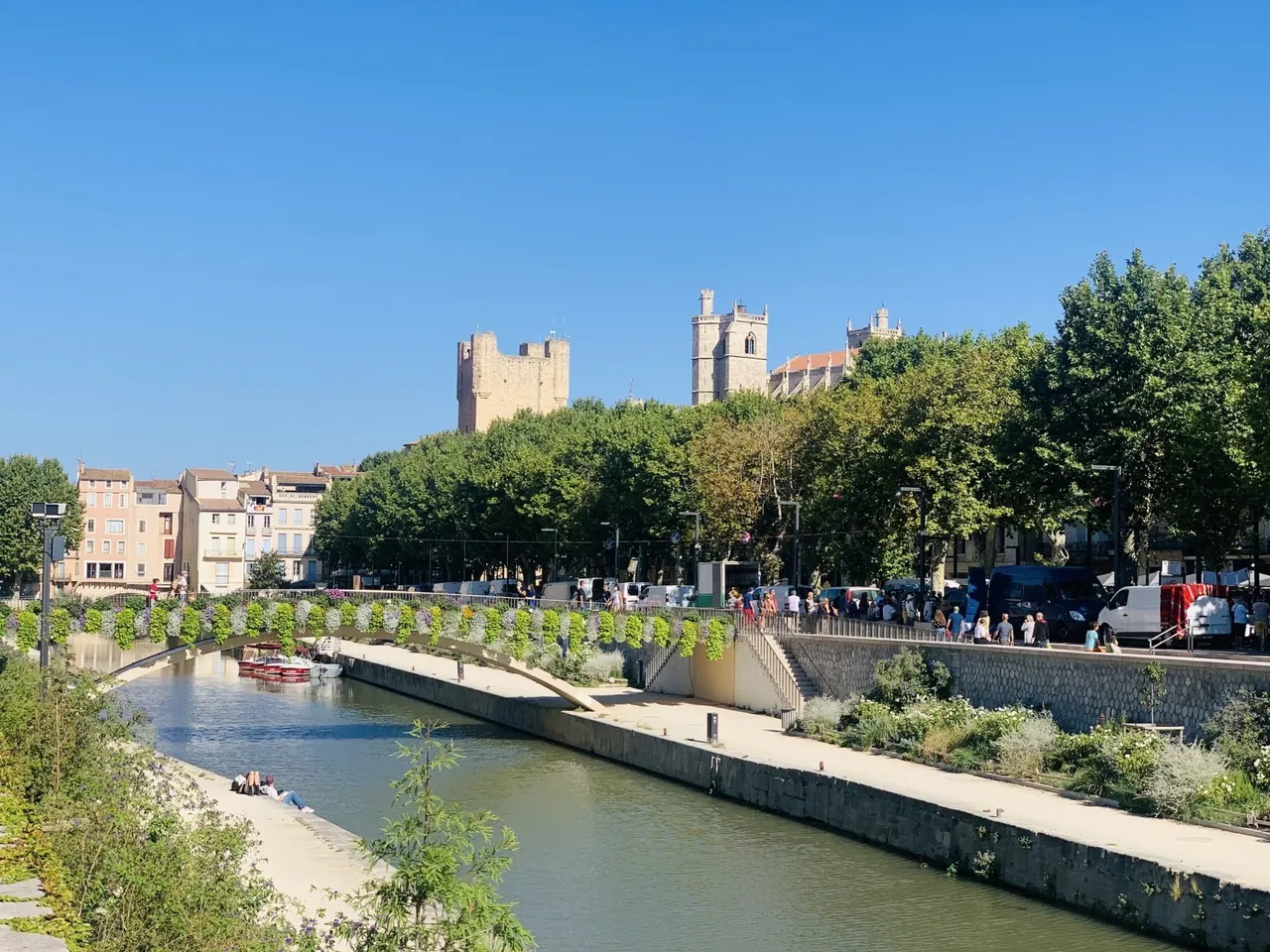
The cathedral that was never finished
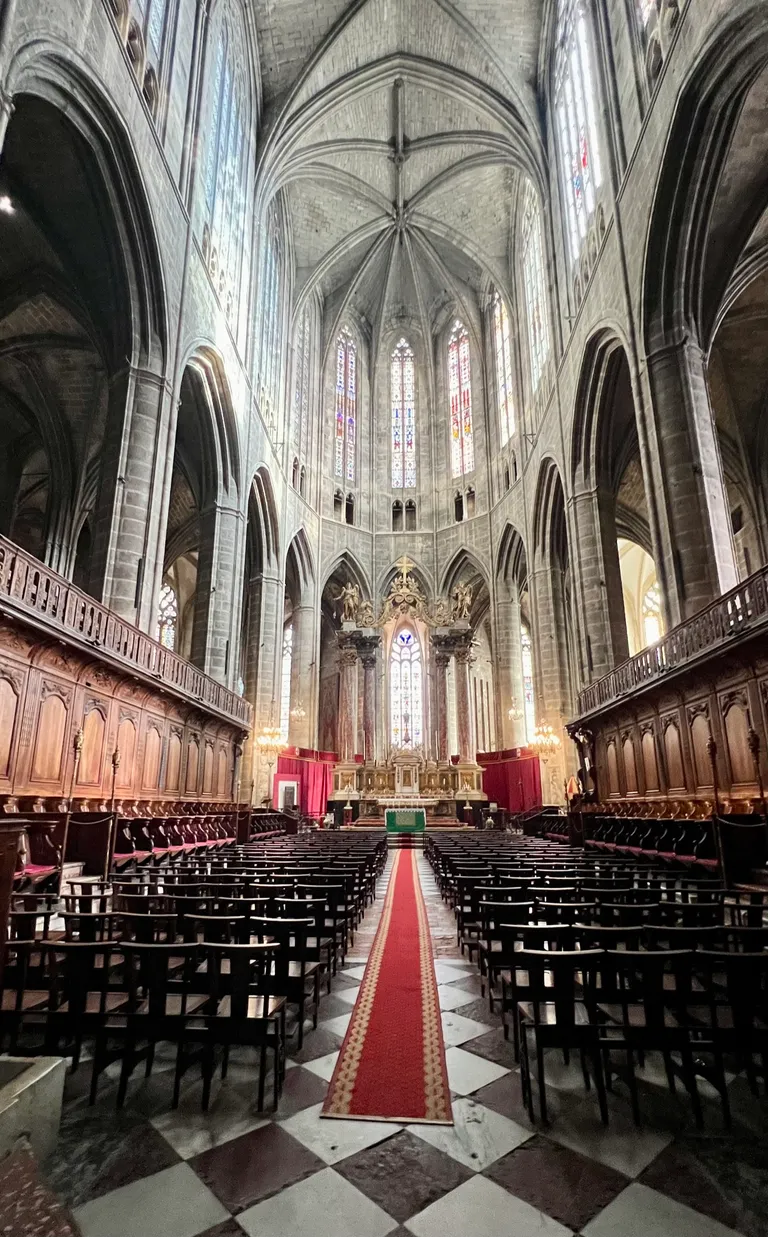
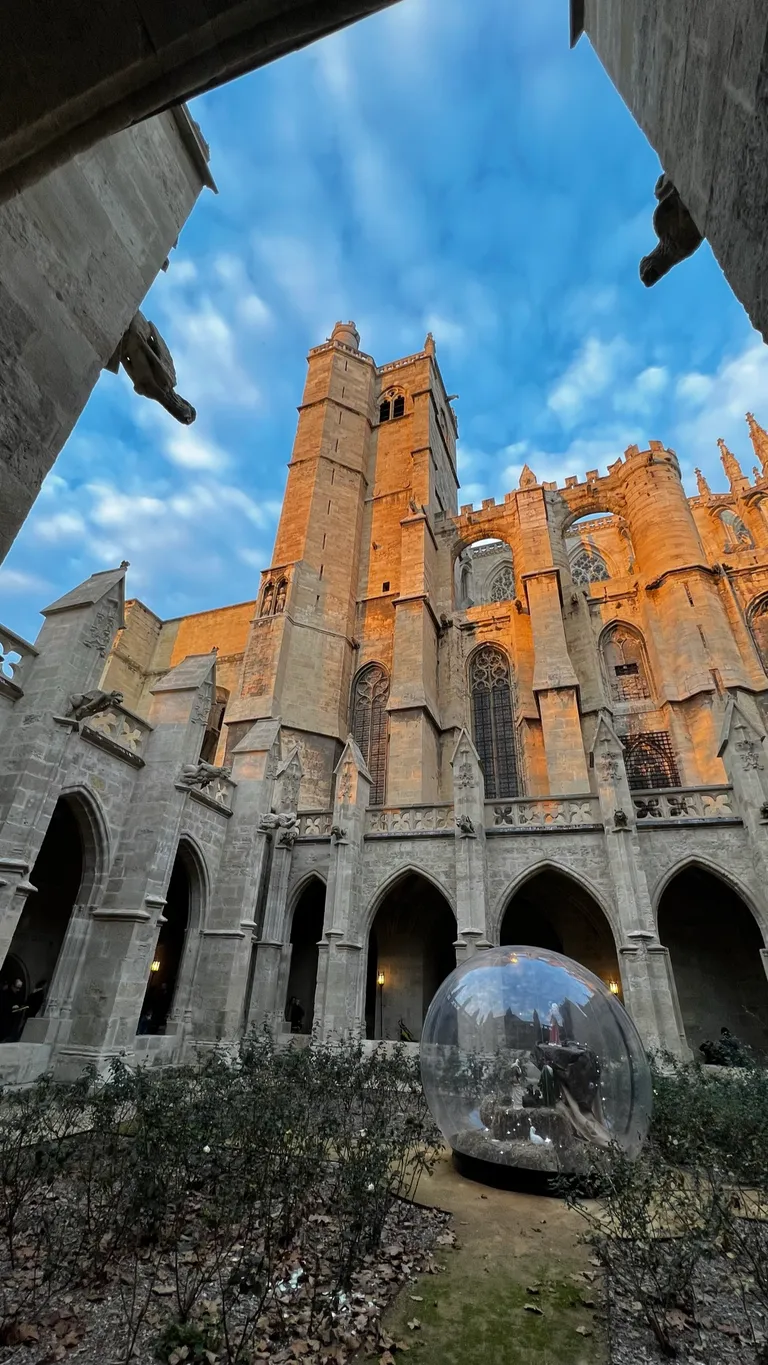
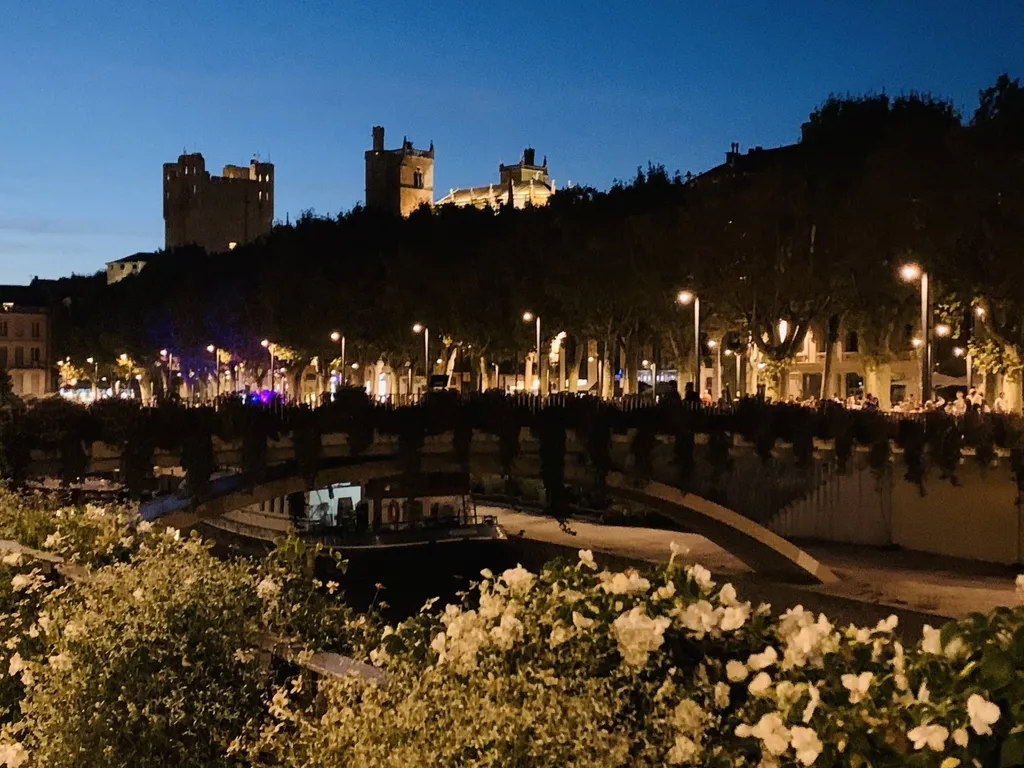
Narbonne's landmark is a magnificent torso: the cathedral of Saint-Just-et-Saint-Pasteur was begun in 1272 — and remained a fragment. Only the choir was completed, but what a choir: at around 41 metres it is one of the tallest Gothic choirs in France — only a handful of cathedrals rise higher. The nave would have had to break through the old city wall, then came plague and lack of money — so the torso remained. That is exactly what makes a visit so striking: you stand in a space that is really only half a church, and still crane your neck. Entry is free.
Archbishops' Palace & Place de l'Hôtel de Ville
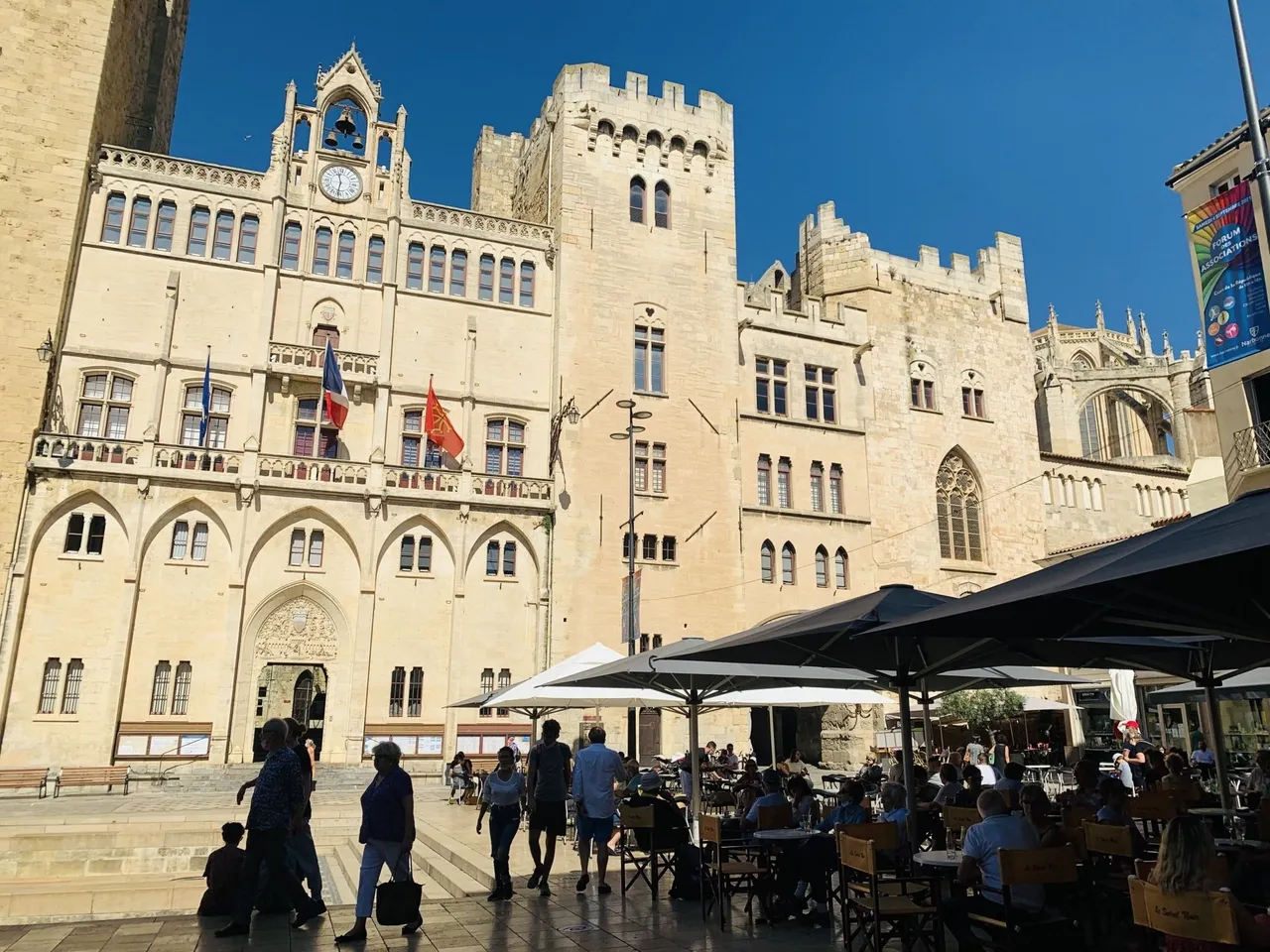
Right next to the cathedral lies the heart of the old town: the Palais des Archevêques, the Archbishops' Palace. For centuries the powerful archbishops of Narbonne resided here; today it houses the town hall and several museums. If you like, climb the Donjon Gilles Aycelin — from the top of the tower you have the old town, the cathedral and, on a clear day, the Pyrenees before you. On the square below, people sit over a glass of wine in the evening while swallows circle above the battlements.
A word about Occitania
Notice the red-and-gold flag with the cross on the town hall? That is the Croix occitane, the emblem of the whole South. Narbonne lies in the region of Occitania — a name that recalls a language of its own: Occitan (the langue d'oc), spoken here for centuries and the source of the region's name. You will hardly hear it in everyday life any more, but you see it everywhere — on bilingual town signs, in street names, in the proud cuisine and in the "Adiu" with which some people greet you here. It is the cultural undertone that sets the French South apart from the North.
Rome beneath your feet
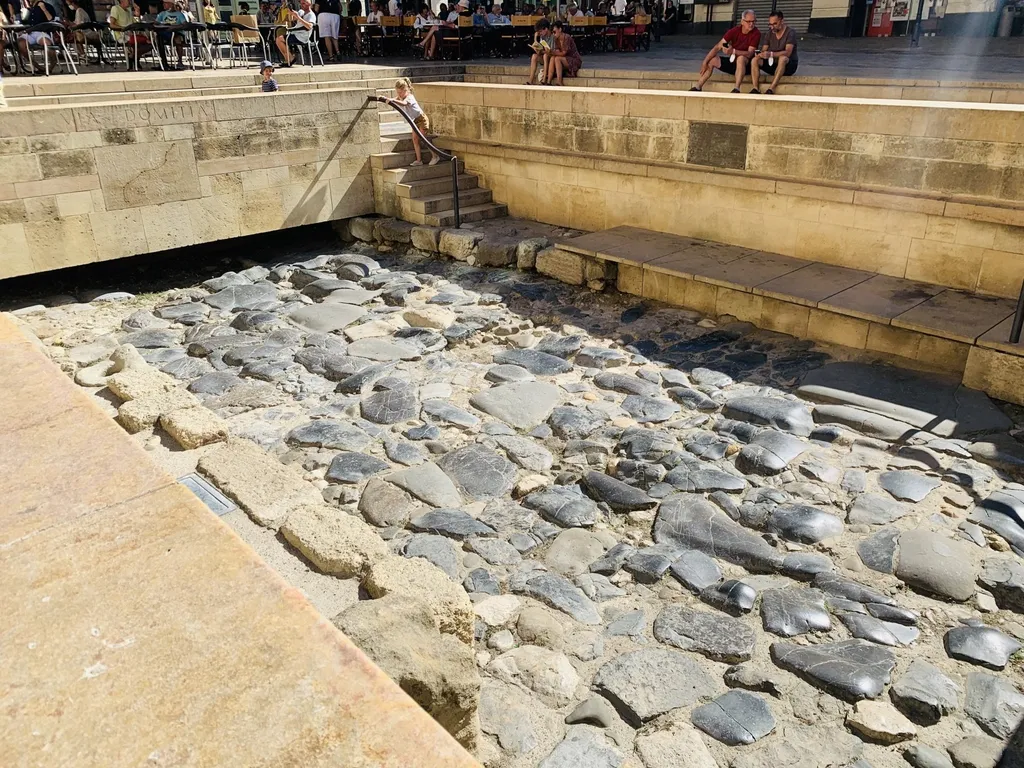
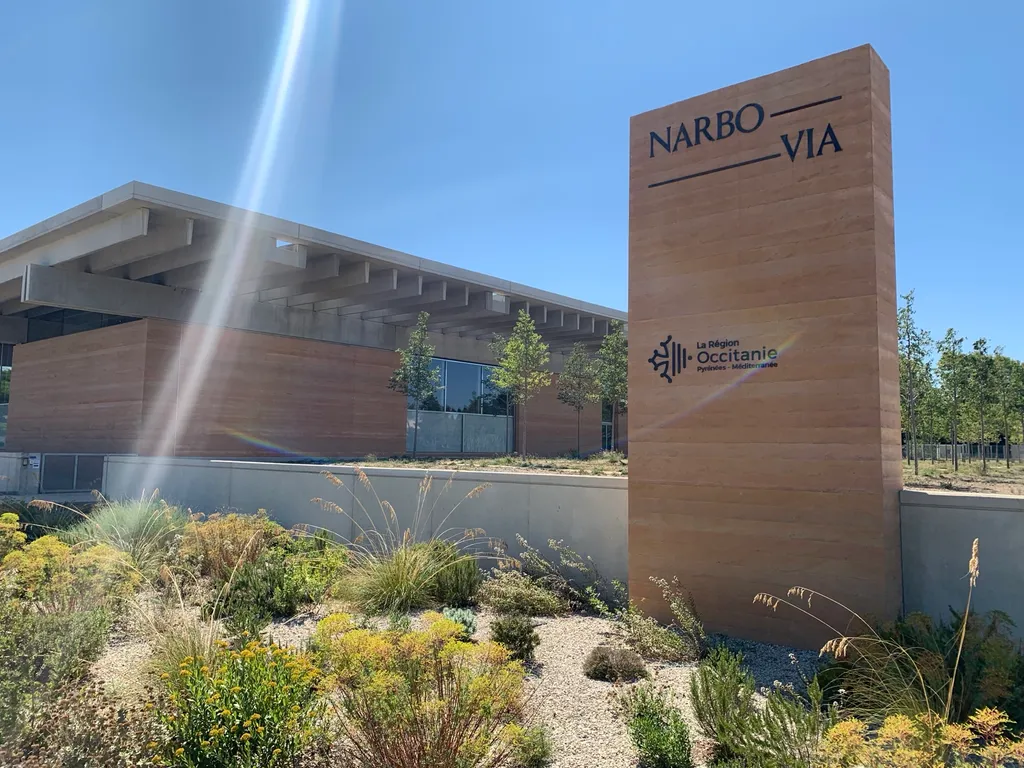
Narbonne — Roman Narbo Martius — was founded in 118 BC as the first Roman colony in Gaul and soon became the capital of an entire province that even bore its name: Gallia Narbonensis. The Via Domitia, the oldest Roman road in Gaul, which linked Italy with Spain, still bears witness to that greatness: a stretch of the original paving lies exposed in the middle of the Place de l'Hôtel de Ville, right in front of the town hall — 2,000 years of history, set into the everyday life of the town. To dig deeper, visit the Horreum, an underground Roman warehouse, or the modern museum Narbo Via on the edge of town, which brings the Roman past impressively to life.
On the Canal de la Robine
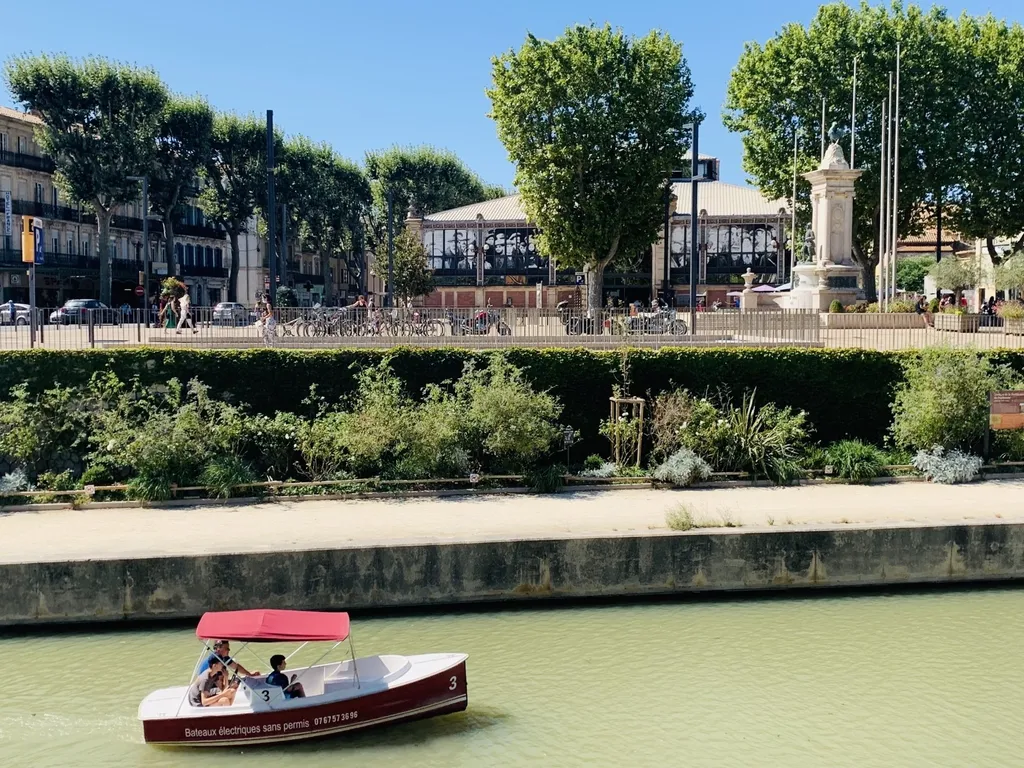
What makes Narbonne so special is the water in the middle of town: the Canal de la Robine — a UNESCO World Heritage site since 1996 as part of the Canal du Midi network — flows dead straight through the centre, lined with plane trees and flowering banks. That the town sits on the water at all is history: the canal follows the old course of the Aude, along which the Romans already ran their port. Narbo Martius was the great trading port of Gaul — the ancient geographer Strabo simply called the town "the emporion of all Gaul". Today the Pont des Marchands spans the canal, one of the last inhabited bridges in France: built over with houses and shops, so that you cross it without suspecting the water below. The promenade is at its best in the early evening, when the façades turn golden and the pedal boats glide along the canal.
Handy on arrival: right by the water, on the Quai Victor Hugo, there are plenty of parking spaces along the canal — many of them free. If you prefer covered parking, take the Parking Indigo Narbonne Halles next door: from the underground car park you are at the market hall and in the middle of the old town within two minutes.
Les Halles: the loveliest break
Right on the canal stands our favourite address in town: Les Halles, the covered market of 1901. Behind the cast-iron Belle Époque façade you find fish, cheese, oysters and the famous comptoirs, where at lunchtime you simply take a seat at the counter. More on that — and our favourite stalls — in its own article: Les Halles de Narbonne.
The hall itself is open daily from 7 am to 2 pm. The big market outside, however, is on Thursdays and Sundays — that is when the stalls stretch from the Cours Mirabeau across Les Barques down to the canal. We have listed every market day in town, including the smaller weekday ones and the market in Narbonne-Plage, here.
And for dinner?
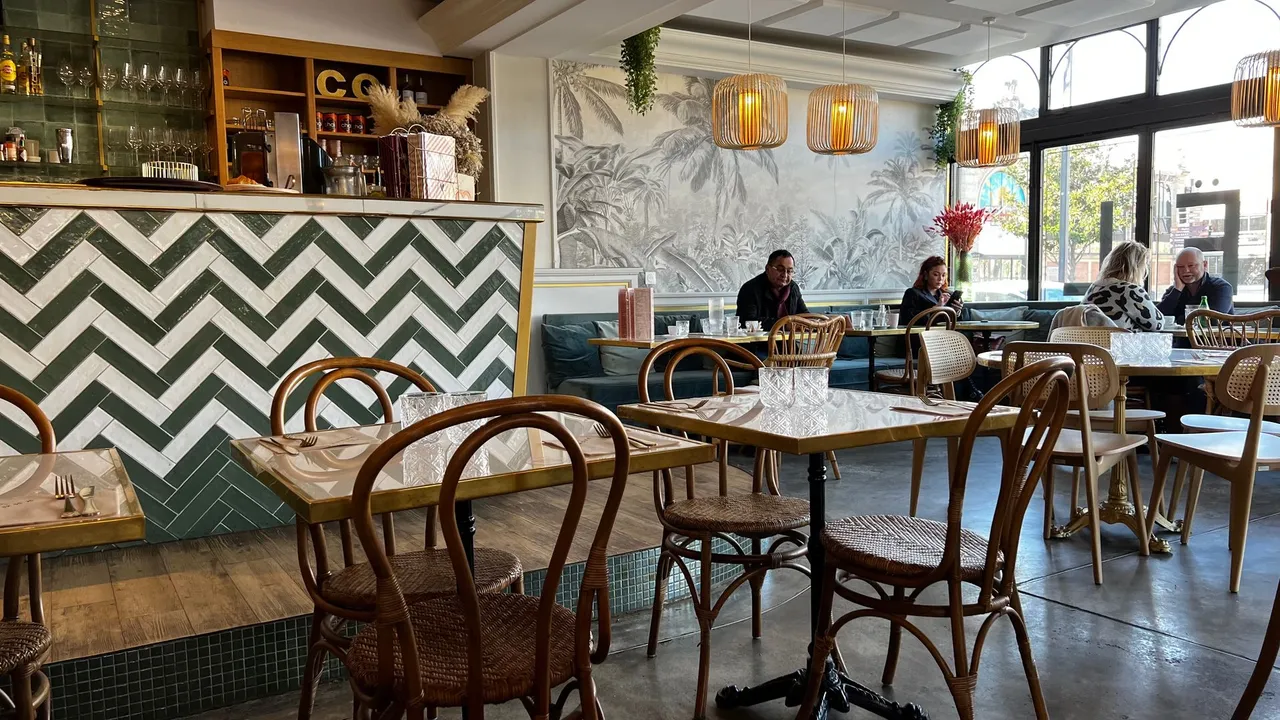
Narbonne has a surprisingly lively restaurant scene. We like the relaxed brasserie Co right in the centre, Chez Marius for honest southern cooking — and if you fancy something different, the courtyard of the Hôtel Mosaïque even serves genuinely good Argentinian food. And for a special evening, few places in Narbonne beat the Maison Saint-Crescent — La Table Lionel Giraud, two Michelin stars in an old oratory, with the relaxed Cave à Manger in the same house. You will find our full list of favourites — from beach club to Michelin stars — in our restaurant guide.
Frequently asked questions
- How far is Narbonne from Salty Dayz?
- Narbonne is our town — from Salty Dayz you are right in the centre in a good 15 minutes. That makes a stroll through the old town, the covered market or along the canal an easy plan even for half an afternoon.
- What are the must-sees in Narbonne?
- The cathedral of Saint-Just with its never-finished Gothic choir, the Archbishops’ Palace on the Place de l’Hôtel de Ville, the excavated Roman road Via Domitia right in front of it, the Belle Époque covered market Les Halles, and a walk along the Canal de la Robine with the inhabited Pont des Marchands.
- Is Narbonne worth a full day?
- You can see the old town comfortably in a morning. Add Les Halles for lunch, the Narbo Via museum and a café by the canal, and you fill a whole day — and luckily Narbonne is close enough to simply come back.
- Where do you park in Narbonne?
- Most relaxed on the Quai Victor Hugo: there are plenty of spaces along the canal there, many of them free. If you prefer covered parking right in the centre, head for the Parking Indigo Narbonne Halles — the underground car park sits on the canal next to the market hall, and from there you are in the car-free old town in two minutes.